What happened to the tens of thousands of languages we once spoke?


Currently, humans communicate using approximately 7 500 spoken languages. This might seem like many, but they’re just a small fraction of those that have existed. A research team from Germany, Spain and the United States mapped out how linguistic diversity around the world likely changed over the last 12 000 years. Published in ‘Science’(opens in new window), the findings show that the volume of languages increased across most of the Holocene, the period that began roughly 12 000 years ago.
When populations ruled the word
“This paper presents an innovative approach to understanding the dynamics of human cultural diversity in the past, addressing one of the central yet least accessible questions in the human sciences,” commented co-author Marcus Hamilton of the University of Texas at San Antonio in a news item(opens in new window). “Progress has been limited not by a lack of theoretical interest but by the exceptional difficulty of observing the relevant dynamics empirically.” This volume peaked about 1 000 to 3 000 years ago – in the so-called Golden Age when 20 000 to 75 000 languages coexisted. Then they experienced a rapid decline. “The languages we see today are the survivors of a massive and highly selective historical bottleneck,” explained lead author Damian Blasi, researcher at Spain’s Catalan Institution for Research and Advanced Studies and Harvard University. “A linguistic feature may be common not because it is inherently superior, but because it happened to be carried by populations that expanded. Extinction may have shaped linguistic diversity much more profoundly than we previously appreciated.” The researchers claim that the collapse began long before European colonialism about 500 years ago. Growing states and empires spread their languages, populations and diseases to independent communities. Co-author Claire Bowern of Yale University added: “The most unexpected result is how recent the peak appears to have been.”
How farming multiplied our words
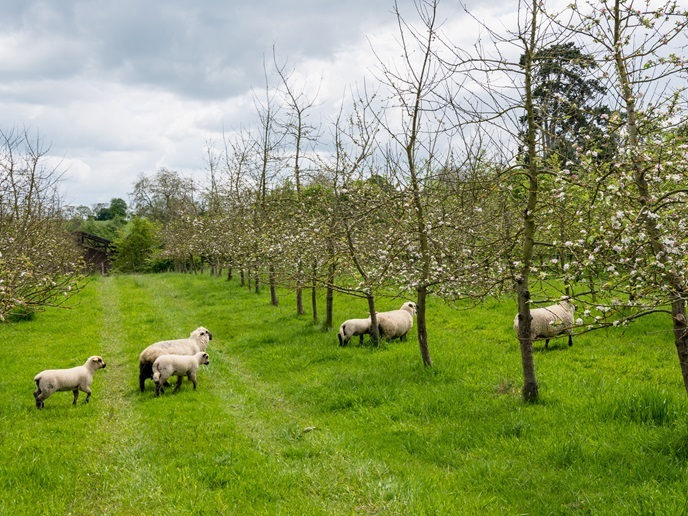
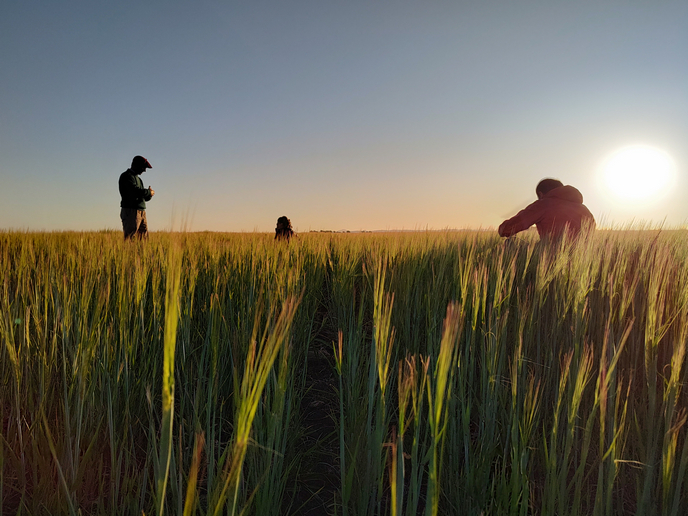
Agriculture gave birth to thousands of new languages before subsequent forces wiped many of them out. As farming communities moved across new landscapes, distance and separation allowed dialects to transform into brand new languages over time. “One of the first surprises was that the world immediately before agriculture was probably not exceptionally rich in languages,” stated co-author Russell Gray, Director of the Department of Linguistic and Cultural Evolution at the Max Planck Institute for Evolutionary Anthropology in Germany. “There were most likely fewer languages than there are today. Linguistic diversity then grew alongside the human population for thousands of years.” Writing first appeared only about 6 000 years ago, but many languages vanished before writing systems recorded them. To bridge this gap, the team of researchers had to combine ethnographic data from 171 hunter-gatherer and fishing societies whose traditional ways of life had not been drastically changed by farming communities, ancient population estimates, and statistical and social computational models. The story of human languages was never a simple downward slide. So if you think languages are dying fast now, remember that history has shown even quicker extinctions.