A space-based observatory to monitor climate emissions


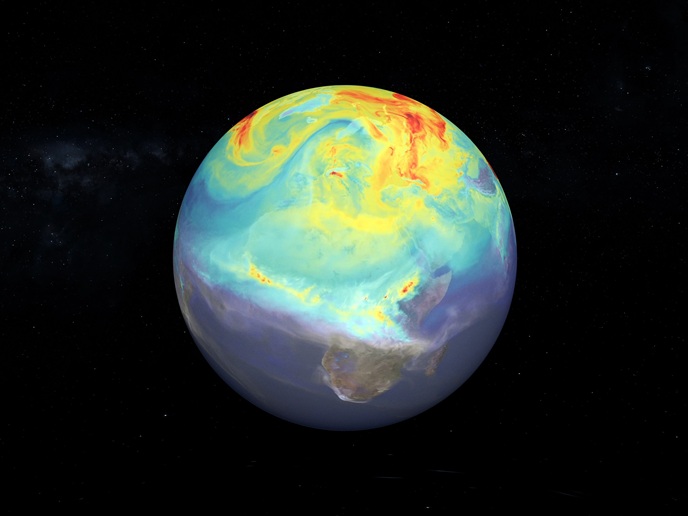
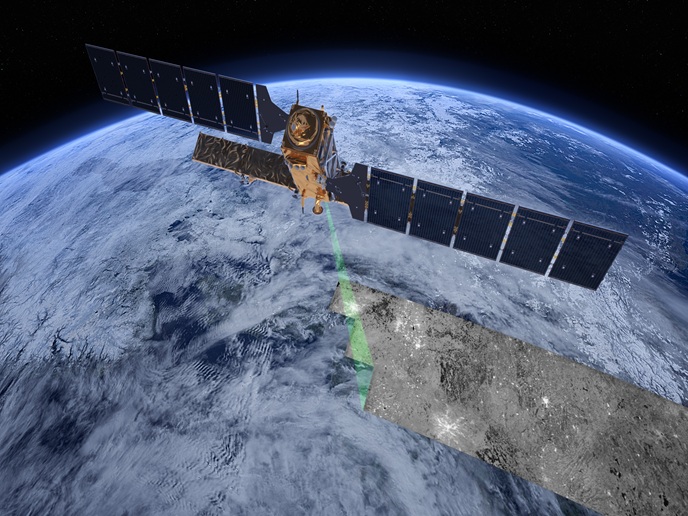
The European Union is making Earth observation(opens in new window) (EO) data a key tool in its fight against climate change. The SCARBOn(opens in new window) project is making this possible. A consortium of 10 European partners coordinated by Airbus Defence and Space(opens in new window) in France is working to design a constellation of small satellites that can track carbon dioxide (CO2) and methane (CH4) emissions in the Earth’s atmosphere. “Meeting our climate objectives requires the accurate and permanent tracking of anthropogenic greenhouse gas emissions, and the ability to evaluate reduction efforts, both of which can be done via space observations,” explains Céline Belloc, project manager at Airbus. “SCARBOn is dedicated to advancing the space-based monitoring of anthropogenic greenhouse gas emissions, providing bi-daily recurrence and accurate observations of both CO2 and CH4 emissions.”
A shrinking sensor to monitor a growing problem
The SCARBOn satellite concept is built on NanoCarb, a cutting-edge miniaturised spectrometer, both developed by the predecessor project SCARBO, which also developed a complementary aerosol sensor called SPEXone. Designed specifically to monitor CO2 and CH4 emissions, the NanoCarb prototype has been upgraded, manufactured and characterised under SCARBOn, with noted improvements to its interferometric core and thermal behaviour. The team is now preparing to run the sensor through airborne trials, assessing its ability to detect plumes of CO2. The NanoCarb sensors are the key component in a scalable and affordable small satellite constellation, the architecture of which is currently under development. This process includes deciding everything from payload design to ground segment operations, data retrieval strategies and deployment options. “SCARBOn has progressed from individual technological developments towards a coherent, scalable satellite mission concept,” says Belloc. Once operational, the constellation will provide high frequency and high spatial resolution observations to complement existing EO systems such as Copernicus(opens in new window).
Boosting the EU’s leadership in Earth observation systems
With the project concluding in April 2027, the project consortium will further develop the NanoCarb sensors towards space flight model manufacturing. This will be followed by environmental and qualification testing, along with the continued development of on-board and on-ground data processing capabilities to enable the efficient and timely handling of the measurements. A further task will be ensuring the system’s interoperability with existing and future EO missions, such as integrating SCARBOn data with other emissions observations. The data will be available to scientists, policymakers and other users, improving our ability to understand emission trends, assess mitigation measures, and strengthen the transparency of emissions reporting. By advancing innovative and miniaturised sensor technology, as well as the scalable small-satellite constellation concept, the SCARBOn project is paving the way towards an improved space-based greenhouse gas monitoring solution. The constellation will aid the implementation and monitoring of EU climate policies such as the European Green Deal(opens in new window), and support the EU’s contribution to the Paris Agreement(opens in new window). Belloc concludes: “SCARBOn is a key contributor to not only Europe’s climate objectives, but also the EU’s global leadership in Earth observation systems.”