



Promoting carbon farming across the EU

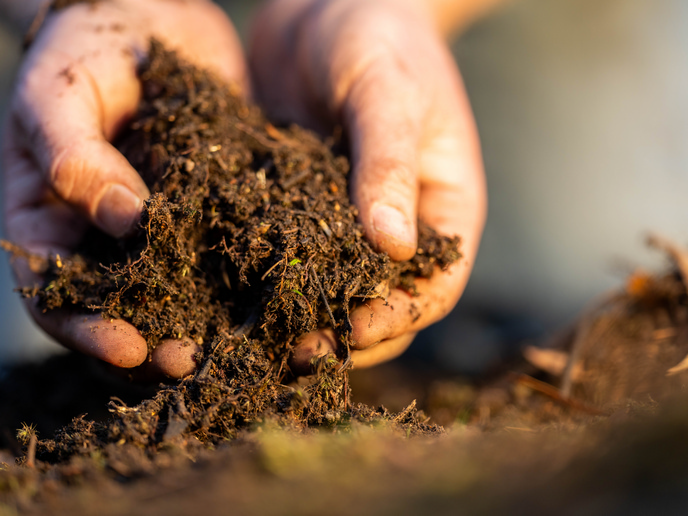
Carbon farming aims to increase carbon sequestration and storage in soils and vegetation, and reduce agricultural greenhouse gas emissions. This whole-farm approach could also act as a catalyst for transforming farming and food systems, so they deliver benefits for soil health, biodiversity, water, climate resilience, food production and rural communities. Yet despite considerable promise, there is currently little demand for compensation credits, especially at the scale required. “The market reward for carbon removal often does not cover the cost of implementing the required practices, which ends up disincentivising farmers,” explains Tristano Bacchetti De Gregoris, founder and head of research & innovation at SAE Innova(opens in new window) in Spain. Through the EU-funded CREDIBLE(opens in new window) project, Bacchetti De Gregoris and his colleagues aimed to foster trust in carbon farming across European countries. “Building trust requires showing that carbon farming is part of a broader, credible transition towards more sustainable and resilient farming systems that deliver many benefits beyond carbon,” he says. The project developed a scientific and policy network spanning sectors and countries, to boost transparency, environmental integrity and knowledge sharing around carbon practices. “CREDIBLE was built around the idea that progress in carbon farming would require bringing together communities that were often working separately, including researchers, policymakers, businesses, farmers and existing initiatives,” Bacchetti De Gregoris explains.
Creating a ‘network of networks’ to promote carbon farming
To this end, CREDIBLE’s central creation was a ‘Network of Networks’, a space where people could compare experiences, identify barriers and build shared positions around three core questions: which practices work, what standards are needed, and how progress should be monitored. More than 200 international experts participated through focus groups, which provided technical and practical groundwork. The third European Carbon Farming Summit(opens in new window) in March 2026 then opened these discussions to a much broader community. As the project’s main platform for knowledge exchange, the three summits convened over 1 500 participants. The next event, planned for 2027 in Kraków aims to foster further discussion and progress in the field. “Over three years, the conversation moved from awareness and trust-building towards implementation and action,” notes Bacchetti De Gregoris. The resulting ‘toolbox’ brings together practical guidance, policy recommendations, monitoring approaches and knowledge developed through this collaborative process, providing a resource for advancing carbon farming across Europe.
Shifting the mindset around carbon farming across Europe
Arguably the most important result of the project was helping to shift the way carbon farming is understood in Europe. “The mindset has shifted from a narrow focus on carbon measurement and certification to a broader vision of agricultural and food-system transformation, where soil health, biodiversity, climate resilience, food production and fair value for farmers are all part of the same picture,” he adds. CREDIBLE also fed evidence and recommendations to policymakers directly involved in the development of the EU Carbon Removals and Carbon Farming(opens in new window) (CRCF) Regulation, helping to connect legislation with practical realities in the field.
Working towards real-world carbon farming implementation
The project’s work continues in a second phase, CREDIBLE 2.0, which aims to progress the research towards real-world implementation of carbon farming across Europe. “This new phase will strengthen capacity building through training, workshops and practical guidance for farmers, advisors, researchers and policymakers, while continuing to support the implementation of the CRCF,” says Bacchetti De Gregoris.