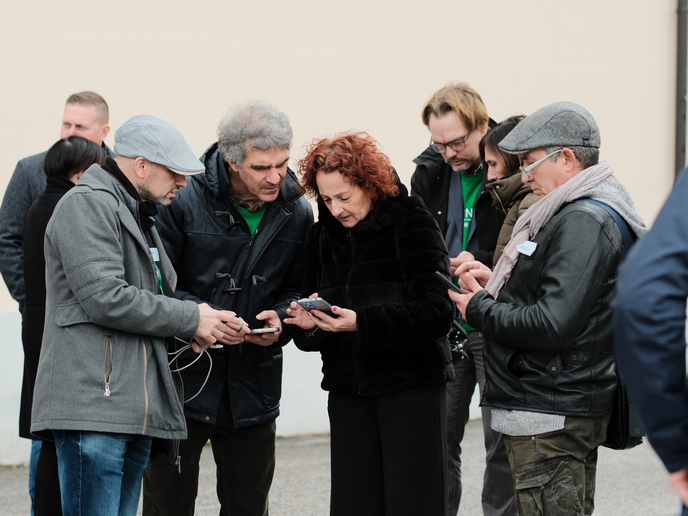
Online test inspires 49 000 plans to cut carbon emissions


The way we eat, live, travel and shop shapes our impact on the climate. The EU-funded PSLifestyle(opens in new window) project, coordinated by the Finnish Innovation Fund Sitra(opens in new window), developed an online tool to help people understand their impact and plan ways to reduce it. As users selected actions for their personal plans, the project collected their choices to identify where better infrastructure, products or services could support and enable action.
Carbon footprint advice tailored to everyday life
The Lifestyle Test(opens in new window) combines a carbon footprint calculator with personalised recommendations and a planning tool. Citizens helped develop it through the project’s work in eight pilot countries: Estonia, Finland, Germany, Greece, Italy, Portugal, Slovenia and Turkey. The recommendations needed to fit daily life in each of these countries. Differences in housing conditions, eating habits, infrastructure and available services shaped users’ carbon footprints and the changes they could realistically make. Project coordinator Alexander Kohl explains: “The application could not rely on one universal list of actions; it had to localise calculations, examples and recommendations so that users would see actions that felt relevant, credible and achievable in their own country context.”
Lifestyle plans show engagement beyond carbon footprint tests
Targeted marketing, partner networks and national deployment helped the tool reach citizens at scale. “By project closure, the Lifestyle Test had reached roughly 493 000 completed tests and about 49 000 personalised lifestyle plans, corresponding to approximately a 10 % conversion from test completion to plan creation,” reports Kohl. Users created their plans by selecting the recommended actions they wanted to take. Guidance cards explained how to carry out those actions, and users could return to their plans to mark them as completed. These records and user feedback showed engagement beyond the initial test. However, the project did not systematically track behaviour outside the application, so these records could not establish whether all selected actions became lasting habits.
Lifestyle data reveals barriers to sustainable choices
The application collected users’ choices in an anonymised dataset(opens in new window), allowing the project to examine patterns without identifying individuals. As Mänty says, “The collected data showed that people were often willing to adopt actions that were concrete, familiar and within their own decision-making power, especially when the actions also offered co-benefits such as saving money, improving well-being or making everyday life easier.” The data also revealed how infrastructure, prices, regulation and services could limit those choices. Such barriers affected, for example, people’s ability to change travel habits or improve their homes’ energy use. The dataset reflects people who chose to use a sustainability tool, so it cannot be treated as representative of the whole population. Uneven participation between countries, digital access and demographic coverage also limit wider conclusions. Following the project’s closure in September 2025, the plan is for an international non-governmental organisation to manage the test and its data tools. The open dataset will remain available through public repositories, while dashboard tools are intended to support policy and service development. Future funding plans aim to support maintenance and expansion while reducing reliance on Sitra. Public authorities and businesses could use these resources to identify where people need better transport services, support to improve their energy use at home and access to sustainable products.