Strengthening the role of citizens and communities in environmental compliance assurance


Several local and international laws and frameworks are in place to address pollution, biodiversity and deforestation. Environmental compliance assurance (ECA), which encompasses promoting, monitoring and enforcing rules, is lagging due to limited awareness and slow implementation. Citizen science can help close this gap with data, knowledge and action while empowering citizens to hold decision-makers to account. Collaborative ECA is just this – citizens, communities and relevant authorities as partners in ECA. The EU-funded MoRe4nature(opens in new window) project, running through December 2027, is laying the groundwork(opens in new window) by addressing how to integrate citizen-generated data and citizen actions into ECA.
Flexible, five-stage methodology
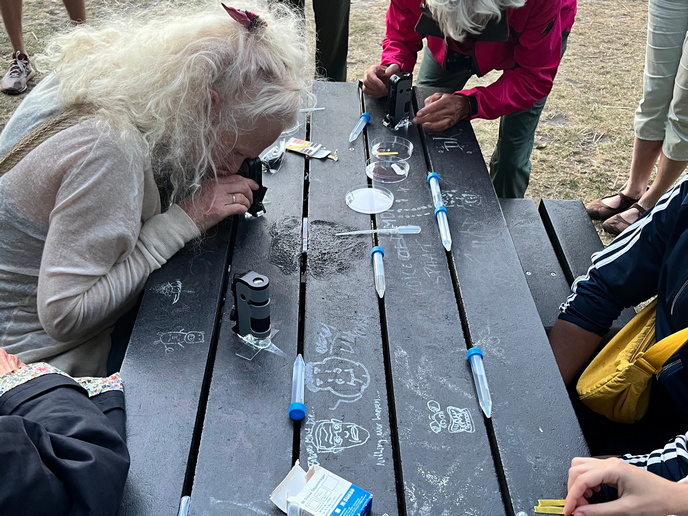
Using an action research(opens in new window) approach, the MoRe4nature project is testing and refining a methodology through 40 real-world case studies spanning Europe, Latin America, Asia and Africa. Its methodology and tools are designed to strengthen capacity, cover data gaps, facilitate data integration into European data platforms, shape policy and communicate urgency. The project’s social learning methodology has five stages and is structured yet flexible enough to fit local contexts. So far, MoRe4nature has engaged more than 70 citizen science initiatives and 70 authorities and national agencies across four continents.
Success stories from Ireland and Poland
In Ireland, Coastwatch surveyed shores nationwide to check compliance with Article 5 of the EU’s Single-Use Plastics (SUPs) Directive. Citizen-generated data gathered since 2020 revealed gaps in enforcement and flagged a rise in banned SUP products in 2024. “This evidence triggered a review of enforcement responsibilities and an Environmental Protection Agency campaign eliminating banned SUPs at the wholesale level. Additionally, Coastwatch’s data on SUP banned items has now been integrated into the national monitoring framework for the Marine Strategy Framework Directive. It is still possible and economically attractive to import banned SUP products at the retail level – but this is a start,” explains project coordinator Uta Wehn of the IHE Delft Institute for Water Education(opens in new window). A MoRe4nature case in Poland is exploring how air-quality readings from citizen sensors could complement official monitoring networks, pollution assessment and forecasting. Relevant authorities are encouraging citizen-led monitoring activities and considering the use of passive nitrogen dioxide samplers as a valid monitoring method. MoRe4nature is also supporting the identification and visualisation of pollution hotspots. The case stakeholders have produced a good-practice guide on data use, community engagement and communication strategies.
Collaborative ECA framework
The consortium is identifying and addressing relational, political and technical barriers to collaborative ECA. These include a common disconnect between the goals of citizen science initiatives versus those of institutions alongside chronic underfunding and capacity gaps. On the technical side, MoRe4nature is applying international standards on data quality, data access and ethical use. The application of such standards is enabling MoRe4nature to build a citizen-generated data node for integration into the Green Deal Data Space(opens in new window) and to align with the European Open Science Cloud in collaboration with the EU-funded SAGE(opens in new window) project. “Citizen science initiatives participating in MoRe4nature are adopting FAIR (findable, accessible, interoperable, reusable) practices, recognising their data’s value beyond its original purpose. We hope that similar initiatives also implement these data management practices; many may underestimate the value of their data,” says Joan Masó of CREAF, project coordination team member. “The MoRe4nature project is fostering dialogue and partnership between citizens and institutions, transforming ECA into a collaboration in which citizens and communities are part of the solution,” says Wehn. MoRe4nature’s tools and lessons, which will be freely available, are laying the foundations for large-scale global replication of citizen-powered collaborative ECA.