Overcoming barriers to widespread drone adoption in agriculture, forestry and rural communities

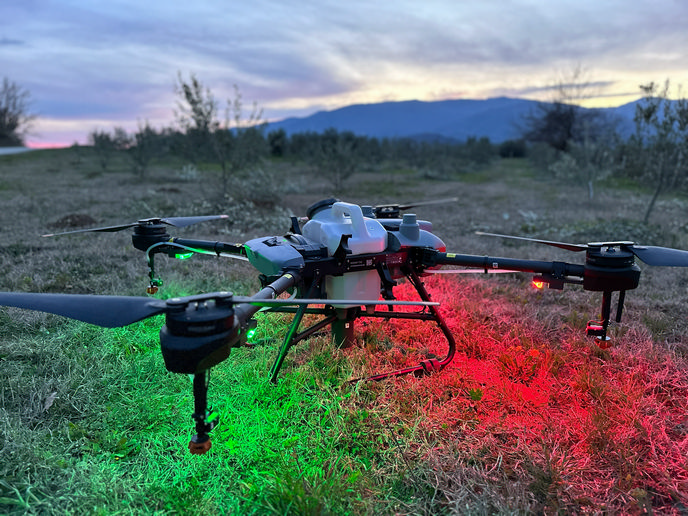
Drones hold great potential to transform agriculture, forestry and rural areas by improving crop monitoring, precision spraying, environmental management and local transport. However, their uptake in Europe remains relatively limited and uneven. The EU-funded ICAERUS(opens in new window) project bridged the gap between the technological potential of drones and their practical use in rural areas. “Rather than looking only at whether drones can technically perform a task, we examined what is needed for drone-enabled services to become useful, accessible, economically viable, environmentally responsible and trusted in real-world conditions,” comments project coordinator Spyros Fountas, professor in agricultural engineering at the Agricultural University of Athens.
Factors holding drone tech back
Project researchers determined the usefulness of drones for timely and high-resolution crop monitoring, remote livestock monitoring, forest health and biodiversity assessment, wildfire risk monitoring and rural cargo delivery. Specifically, they demonstrated and evaluated crop monitoring in Spain, drone spraying in Greece, livestock monitoring in France, and forestry and biodiversity monitoring in Lithuania, as well as rural logistics in North Macedonia and Greece. This work helped to assess where drones offer tangible benefits and what conditions are necessary for wider use. The ICAERUS team also generated important scientific evidence on precision spraying. Field trials showed that operational choices such as flight altitude, speed and the use of buffer areas strongly influence spray drift. The drones caused 65 % to 70 % less spray drift nearby compared to a conventional sprayer. Drift occurs when wind carries tiny droplets of spray away from the intended crops and into surrounding areas. Another important finding was that drones are not automatically more sustainable or economically advantageous than traditional approaches. Their performance depends on such factors as how intensively equipment is operated, service life, energy use and the activity being replaced. Lastly, project partners studied drone adoption involving nearly 500 stakeholders. The results revealed that adoption not only depends on technical performance but also on perceived usefulness, ease of use, opportunities to experience the technology, digital confidence and access to appropriate support.
A legacy for future drone projects, policy and practice
An extensive evidence base for drone uptake together with tools(opens in new window), datasets(opens in new window), two policy-oriented white papers on drone spraying in Europe(opens in new window) and on adoption, sustainability and regulation of drone-enabled rural services(opens in new window), as well as demonstrations(opens in new window) support farmers, service providers, researchers, businesses and policymakers in the responsible deployment of drone services. Online courses and onsite workshops(opens in new window) have attracted over 1 500 enrolments. Demonstration and outreach activities engaged more than 2 000 stakeholders. Project results and resources are freely available through a web-based interactive hub called the ICAERUS Platform(opens in new window). The wider European drone ecosystem was heavily involved, too. Through four open calls(opens in new window), the project received 271 applications from 40 countries and funded 20 external projects with a total of EUR 1.08 million. This enabled additional drone applications to be tested. “ICAERUS moved the discussion from ‘what can drones do?’ to ‘how can useful drone services actually be deployed responsibly and at scale?’,” concludes Fountas. “By combining real-world demonstrations with environmental, economic, regulatory and adoption evidence, the project provides a practical foundation for turning promising drone technologies into sustainable services for European agriculture, forestry and rural communities.”