What is time, and where does it come from?

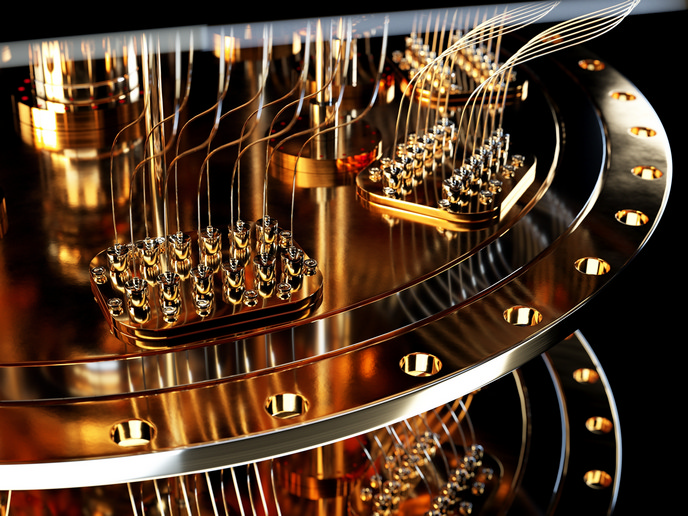
From Aristotle to Stephen Hawking, humans have been preoccupied with the definition of time. So was born some of science’s deepest questions. What if time emerges from change instead of being a fundamental law of physics? Could time be an illusion? A physicist at the University of Birmingham in the United Kingdom introduced a surprising new method to explore these questions. Professor Giovanni Barontini created a ‘mini-universe’ in his lab to demonstrate how time can emerge without a clock. In doing so, he raises profound questions about the nature of reality itself. The findings were published in the journal ‘Physical Review Research’(opens in new window). Barontini showed that it’s possible to trace the passage of time without depending on a clock. By chilling a cloud of 24 000 atoms to just a few billionths of a degree above absolute zero (about – 273 °C), he built an isolated quantum system that continuously expands and shrinks. At this extreme temperature, the atoms lose almost all of their thermal energy and slow down to a crawl, serving as an unspoiled laboratory model of a tiny universe.
Look, no clock!
These atoms were separated into two regions with a laser. The barrier allowed Barontini to observe one section while the other stayed out of view. He monitored changes to the atoms to see if the system generated its own sense of time, testing a long-standing theory in quantum gravity. Because the entire system was completely sealed off, he removed the need for an outside clock and let the atoms’ own activity measure time. As atoms rushed across the laser barrier, time inside the model appeared to run faster, and as they slowed, time slowed right along with them. When the atoms stopped moving and stabilised, the internal clock paused, proving that time can be tracked purely through changes inside the system. In other words, the experiment revealed that time doesn’t need an external clock to exist, instead it rises naturally from changes within the system itself.
Tool to tackle how time works in the quantum world
This study doesn’t solve how time works across the entire universe. But by harnessing these ultracold atoms, the scientific community now has a far more realistic tool to study fundamental theories of time, the early universe and time itself from their own labs. “In some theories of the universe, especially quantum gravity, time doesn’t appear as a built‑in feature,” explained Barontini in a news item(opens in new window). “Yet in everyday life, time flows from past to future – why is this so, when most basic laws of physics work the same way forwards and backwards?” He concluded: “This study provides clear experimental evidence that ‘time’ can be defined by changes within a system rather than as the external ‘ticking clock’ we think of as time. It offers new insight into the nature of time in quantum gravity that could be used to describe dynamics just as effectively as conventional time.”