The real state of biodiversity in sub-Saharan Africa

Biodiversity is essential for sustainable development, so why are decision-makers not effectively incorporating biodiversity management in sub-Saharan policy and planning? One reason is the lack of context-specific information on biodiversity in countries south of the Sahara. This gap has now been addressed by a new study(opens in new window) partly supported by the EU-funded BIOBANG project. The study harnessed the localised knowledge of 200 experts in African fauna and flora to determine the state of biodiversity in this understudied region of the world.
Broadening the definition of expertise
The study recruited experts from a broad range of occupations – researchers, field guides, park rangers, conservation practitioners and museum curators – with a particular focus on African experts, to overcome persistent biases towards Global North experts in this kind of research. This led to a much more accurate picture of how sub-Saharan species are affected by human land uses, presented in an online map(opens in new window) enabling users to explore biodiversity intactness and land use statistics in different sub-Saharan countries. “This assessment addresses a major gap for African countries, which often lack the biodiversity information needed to inform policy, reporting and land-use planning,” states study co-author Reinette Biggs, professor at Stockholm University’s Stockholm Resilience Centre, in a news item(opens in new window) posted on its website. “We now have a more credible evidence base to support development strategies that sustain both nature and people.”
A comprehensive picture
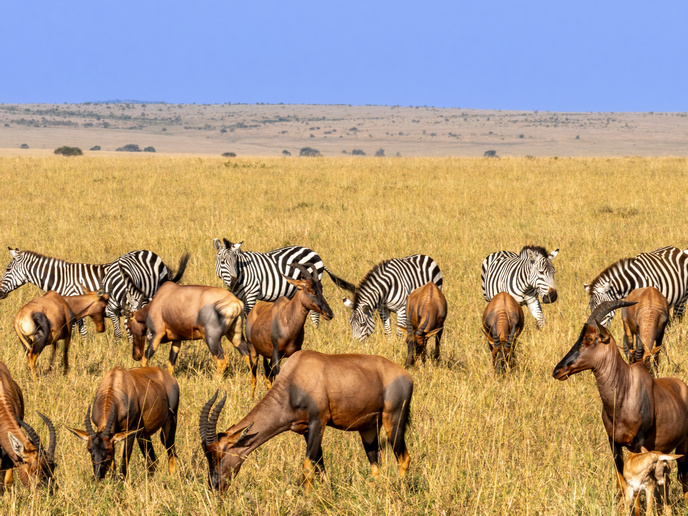
The study provides a comprehensive assessment of biodiversity intactness in sub-Saharan Africa. It also reveals a worrying reality: the region has lost about 24 % of its pre-colonial and -industrial biodiversity, with vertebrates generally faring worse than plant populations. Among mammals, large herbivores and carnivores have experienced the greatest declines in abundance, with losses up to 80 %, followed by primates, with up to 54 %. Least affected have been smaller vertebrates such as rodents and grassland birds (up to 18 %). The biodiversity intactness of plant groups ranged from 55 % to 91 %, with forest and swamp trees and shrubs experiencing the greatest losses, and herbaceous plants proving the most resilient. Large variations in biodiversity intactness were also found to exist across countries and ecosystems. Rwanda and Nigeria were the least intact, at 48 % and 53 %, respectively, and Namibia and Botswana the most intact, at 87 %. Fynbos and grassland biomes were affected worse than more arid biomes, such as deserts. Crucially, most remaining wild populations of plants and animals are found in unprotected lands such as forests and rangelands, where people and nature coexist. Losses in biodiversity intactness in the worst-affected biomes are caused by turning land into cropland in the case of grasslands and fynbos, by non-agricultural degradation in the case of forests and by a combination of the two drivers in savannas. “This fundamentally shifts where and how we think about biodiversity conservation in Africa,” reports study lead author Hayley Clements of Stellenbosch University, South Africa, in the same news item. “Protected areas remain vital, especially for Africa’s large mammals, but alone they are insufficient to curb biodiversity loss. Sustainable management of shared working landscapes is key to maintaining biodiversity and supporting livelihoods.” The BIOBANG (Investigating opportunities for transformative change in biodiversity conservation: from Big Data analytics to Gamification.) project ends in 2030. For more information, please see: BIOBANG project