A multichannel approach to emergency alerts

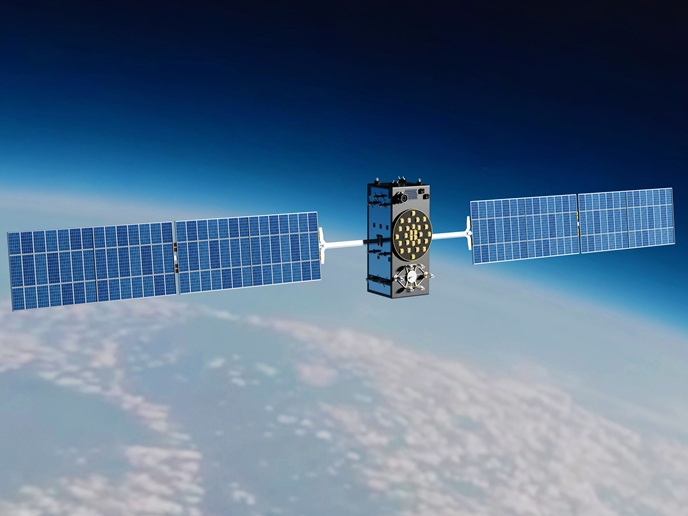
When disaster strikes, every second counts. Civil authorities and citizens must know what to do – and when. This is where the Galileo Emergency Warning Satellite Service(opens in new window) (EWSS) comes in. The forthcoming service will allow national civil protection entities to transmit emergency alerts directly via satellite signal to Galileo-enabled devices(opens in new window) such as smartphones. Each alert will include information on the type of hazard, severity, time, duration and affected area, along with detailed instructions on what to do to stay safe. “While disasters can disrupt or destroy terrestrial telecommunication networks, EWSS transmits its alerts using Galileo(opens in new window) satellites, meaning it will continue to work even when other channels are down,” explains Charly Faradji, project manager at Telespazio France(opens in new window). Through support from the AWARE(opens in new window) project, Telespazio France, together with FDC(opens in new window), has developed an EWSS receiver that can be integrated into a range of existing devices, including digital display panels, speakers, sirens and even the IT networks of critical infrastructure such as buildings, alerting citizens via audio, video and written messages. “By casting a wider net and enabling emergency alerts via as many channels as possible, the AWARE receiver amplifies the Emergency Warning Satellite Service’s impact,” adds Faradji.
Developed and ready for action
The AWARE module has been tested and validated in several live demonstrations(opens in new window). The Logarska Dolina region in Slovenia – which experienced devastating floods in 2023 – was selected as a test site. It is a mountainous area where traditional communications networks may fail to reach isolated communities. AWARE integrated modules into the long-range acoustic devices from Genasys(opens in new window), allowing authorities to deliver crystal-clear audio warning messages in both Slovenian and English within seconds. A second demonstration simulated the impact of a severe thunderstorm over Paris resulting in a highway collision involving a vehicle transporting hazardous materials. Here, an AWARE receiver was installed in an urban digital panel from JCDecaux(opens in new window), commonly found by bus stops. Once the module received the EWSS alert, the panel immediately began broadcasting the warning message in English and French. “Both events – the storm and the accident – pose significant dangers to people, and a multichannel approach to public warning ensures that as many people as possible are alerted on time through relevant channels,” says Faradji.
Access for all
With the Galileo EWSS expected to go live in 2027, AWARE partners are busy working not only to commercialise the existing module but also to ensure it is used to its maximum potential. As to the latter, Telespazio has set up a new consortium with siren manufacturers and civil protection entities from France, Germany and Lithuania to specifically address the use case of widespread legacy siren systems. This will ensure uniform alert dissemination to urban and rural areas, even in territories that are not able to invest in cutting-edge technologies. “The threats that Europe faces are increasing both in quantity and intensity and we would be remiss not to leverage this life-saving technology,” concludes Faradji. “The AWARE solution helps ensure that everybody, regardless of location or device, gets an equal chance of receiving the emergency information they need when and where they need it.”