Smart greenhouse innovation balances crop and energy needs

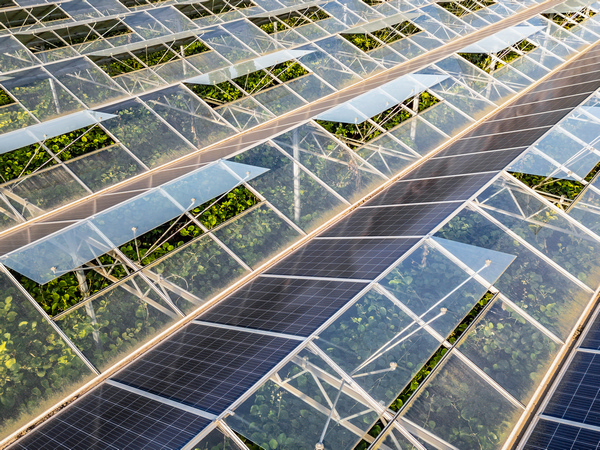
Agrivoltaics(opens in new window) describes integrated systems that enable land to be used simultaneously for agricultural production and solar energy generation. “While photovoltaic systems offer a promising mutually beneficial relationship between food, water and renewable energy, if not properly designed they can jeopardise crop productivity,” says Ibrahim Yehia, coordinator of the REGACE(opens in new window) project. To mitigate this, contributing to a trend for more sustainable cropping, REGACE developed an artificial intelligence (AI)-assisted adaptive agrivoltaic system for greenhouses capable of producing solar energy, while maintaining favourable crop growing conditions. “By addressing challenges of dynamic light and shading, greenhouse climate stability and land-use efficiency, our system minimises the need for costly additional land and dedicated energy infrastructure,” remarks Yehia.
Evaluated under different climatic conditions
Benefiting from wide-ranging expertise – across agronomy, renewable energy, greenhouse engineering, climate analysis and digital monitoring systems – REGACE designed, installed and piloted six agrivoltaic greenhouse systems in Austria, Germany, Greece, Israel and Italy. At the core of the project’s greenhouse-integrated photovoltaic (PV) concept is an adaptive control strategy. Unlike conventional static greenhouse PV installations, assisted by AI-based predictive models and environmental monitoring, REGACE’s solution dynamically tracks and responds to crop requirements, greenhouse conditions and location, precisely positioning semi-transparent PV modules to better manage sunlight and shading conditions. Users access the monitoring and operational interface through a digital control platform, with real-time visualisation of environmental conditions, PV positioning and system performance. The platform can also be adapted for remote access. Experimental greenhouse trials monitored different scenarios under real agricultural conditions, offering insights into what worked best for different crops (including tomatoes, cucumbers and eggplants), climatic conditions and PV configurations. Computer simulations, including those for: crop growth; radiation, transport and airflow; and greenhouse microclimate analysis; were also undertaken, complemented by a digital twin(opens in new window) using machine learning to support operational optimisation under changing climatic conditions. “Combined field measurements and simulations demonstrated the technical feasibility and operational potential of our adaptive greenhouse-integrated photovoltaic design,” adds Yehia. “Given the range of pilot scenarios tested, we are still analysing our validation activities.” REGACE also tested strategies to maintain favourable CO2 levels for crop photosynthesis – including ventilation, thermal and radiation management – under varying climatic conditions, particularly Mediterranean. “We demonstrated that controlled CO2 enrichment can contribute to improved greenhouse environmental stability and enhanced plant photosynthesis, particularly under conditions where light availability and temperature remain within optimal ranges,” explains Yehia.
Improved resource efficiency and climate resilience
Demonstrating how renewable energy production can be integrated into agricultural systems without additional land requirements helps preserve productive agricultural landscapes, while supporting decarbonisation goals, resource efficiency and climate stress resilience. These benefits in turn directly support several key European priorities, including the European Green Deal(opens in new window), climate resilience strategies and the renewable energy transition. As the REGACE system is a suspended lightweight modular design, it can be installed within existing greenhouses as the primary load-bearing framework, simplifying retrofits. Additionally, the project pilots, mostly running for over two years, confirmed the system’s ability to offer stable long-term operation with minimal maintenance beyond routine PV cleaning. “The adaptable and modular design also supports scalability, making it of interest not only for commercial greenhouses, but more widely for high-value crop production, climate-adaptive protected agriculture, water-efficient farming systems and integrated rural renewable energy infrastructure,” adds Yehia. To progress to broader industrial-scale deployment, the team is now focused on further system optimisation – improving their adaptive control strategies and validating them across additional crop types and greenhouse typologies.