Fair business models and policies promote collective behavioural change towards climate-smart agriculture

Agricultural systems are caught in a sustainability crisis brought on by several challenges, such as a growing global population, climate change and environmental degradation. Climate-smart agriculture (CSA) practices that aim to boost productivity, build resilience, and foster climate neutrality and environmental sustainability are a promising solution. However, despite years of financial incentives and technological innovation, uptake of more sustainable practices remains below desired levels. The EU-funded BEATLES(opens in new window) project set out to identify the factors that influence behavioural change towards CSA and develop behavioural interventions, business models and policies to facilitate such a transition.
Lock-ins and levers across five European food systems
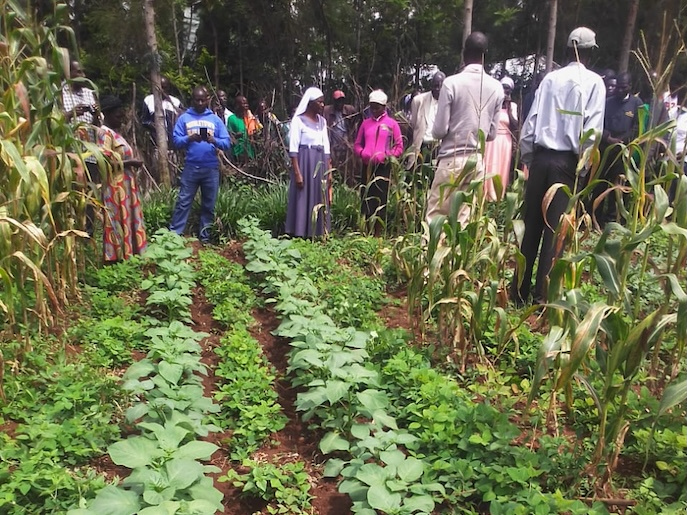
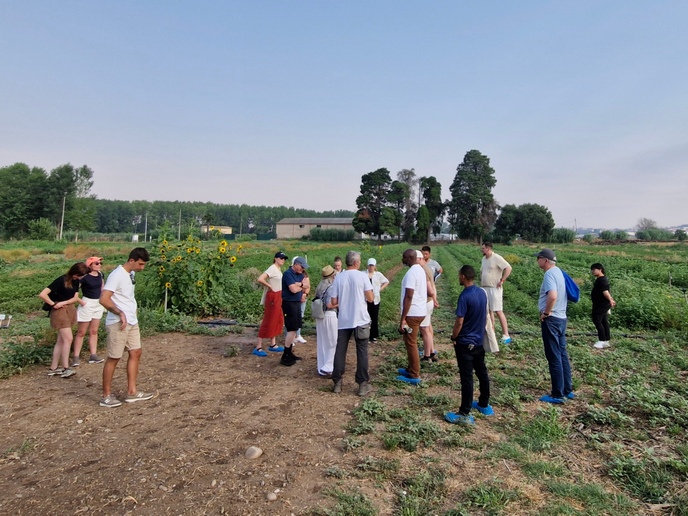
The BEATLES project studied five food systems spanning Europe’s major crop and livestock sectors: organic dairy in Germany, pigs in Denmark, organic apples in Spain, wheat in Lithuania, and onions and potatoes in the Netherlands. Consistent barriers to change emerged across all five: limited education, high upfront costs and farmers’ uncertainty regarding economic benefits, consumers’ disinterest in CSA products, limited access to markets and technologies, and fragmented and cumbersome policy. “The most important barrier, however, was a lack of collaboration and risk sharing along the agri-food value chain,” says project coordinator Spyros Fountas of the Agricultural University of Athens (AUA)(opens in new window). Among the most striking findings, both farmers and consumers felt they contributed more to environmental and animal welfare goals than other value chain actors. The consortium demonstrated multiple ways to unlock behavioural change. Financial incentives remain necessary but insufficient. “Involving farmers in the co-development of solutions increased their willingness to adopt CSA practices. For consumers, awareness of production methods facilitated readiness to pay a premium, though distrust of CSA product labels remained a key obstacle,” notes BEATLES project manager Marilena Gemtou, also of the AUA. Advisory services should increasingly go beyond technical guidance, with interpersonal, practice-oriented, co-creative approaches proving most effective.
Sustainability assessments reinforce the need for fair business models
The project assessed the environmental, economic and social sustainability impact of 25 CSA practices across the case study regions. Significant trade-offs emerged – a practice that was environmentally efficient was often less economically or socially viable. For example, renewable energy and precision agriculture delivered clear environmental benefits – reduced emissions, better resource efficiency and pollution mitigation – but long-term economic returns were often constrained by high capital costs. Tailored approaches that consider local conditions and farmer-specific behavioural profiles, while equitably distributing costs and benefits, are essential. BEATLES developed business models(opens in new window) grounded in fairness and equity around four established dimensions: distribution of resources, rewards and risks; transparent decision-making processes; access to accurate information; and treatment of stakeholders.
Fair policy design and implementation
BEATLES found that existing policy frameworks mainly address distributive fairness through income support and redistribution mechanisms, while procedural, informational and interpersonal dimensions remain underdeveloped. “Embedding fairness across these dimensions as an explicit, measurable criterion throughout policy design, implementation and evaluation is a key project recommendation,” states Fountas. “Just as fair business models ensured that the value created, captured and delivered was shared equitably across agri-food value chain stakeholders, fairness in policy design and implementation increased farmers’ trust in public institutions and their acceptance of policy measures,” Gemtou adds. BEATLES has shown that co-creation of solutions, interventions and policies that promote fairness will be key to behavioural change and CSA adoption. A policy toolkit for diagnosis, design and monitoring is freely available at www.climatesmartagri.eu.