Developing natural, no-waste packaging solutions

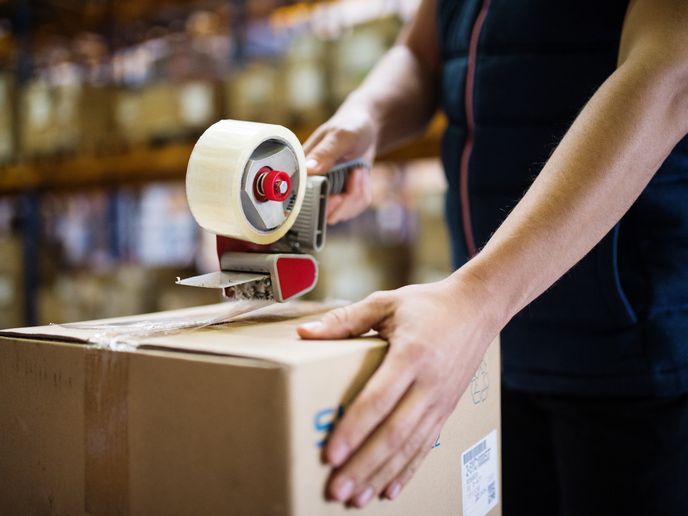
Waste recycling is a critical element of moving towards a circular economy. This remains a significant challenge in the EU however – five tonnes(opens in new window) is produced by the average European every year, with only 41 % actually being recycled. “We generate more waste than we can recycle,” says Karl Pärtel, co-founder of RAIKU(opens in new window) in Estonia. One highly visible component of household waste is packaging – just go look at your bin, says Pärtel. Even if the goal(opens in new window) of recycling 70 % of packaging waste by 2030 is reached, there will still be millions of tonnes of packaging waste that ends up in landfills for years to come.
Natural, compostable, shock-absorbing material
Estonian cleantech start-up RAIKU was launched with the aim of addressing this challenge through the development of a 100 % natural, compostable, shock-absorbing material. The hope is that this can replace plastics and other high-carbon packaging materials typically used in bubble wrap and bioplastics. “RAIKU’s packaging filling is made out of only one raw material – wood,” adds Pärtel. “No chemicals or additives are used in the production. Our raw material use is also extremely efficient, as we can turn one cubic metre of wood into 15 to 20 cubic metres of packaging.” The production process also uses low amounts of energy and water. “Compared to paper production for example, we are able to reduce our resource consumption by 90 %.”
Changing the packaging industry
Ensuring that this packaging innovation was market ready however required substantial research and development work. RAIKU needed to build scalable industrial pilot lines to demonstrate the feasibility of the material to potential commercial partners. This is where the European Innovation Council(opens in new window) (EIC) funded RAIKU bio packaging(opens in new window) project came in. “We were in the classic start-up Death Valley,” explains Pärtel. “We knew that our technology was promising, but at such an early stage, it was difficult to find funding from private investors.” The two-year EIC project enabled RAIKU to further develop the scalable and modular production technology that it believes could change the packaging industry. “This has given us a real opportunity to succeed,” remarks Pärtel. “We can now focus on our next scaling-up steps and how fast we can deploy our technology globally.”
Commercialising environmentally friendly innovations
The EIC project has enabled RAIKU to bridge the gap between concept and market, and to finally commercialise their environmentally friendly innovation. The company currently has around 100 clients from 20 countries, including major brands such as LVMH and L’Oreal. The companies’ wood-based materials are being used to package high-end perfumes, cosmetics and ceramics, as well as electronics. “Next steps include establishing a large-scale factory, as well as deploying several micro-factories,” notes Pärtel. “Our modular technology can be deployed in different formats. We have secured private investment, which will help us to continue our journey of scaling up.” Pärtel states that the company’s long-term goal is to become one of the main packaging materials in the world, replacing energy-intensive to produce and hard to recycle plastics. This will contribute to Europe’s long-term environmental goals. “A circular economy needs products that create no waste at all, and become part of the natural cycle again,” he concludes.