
Integrated methods capture seasonal and longer-term occupations of ecological niches

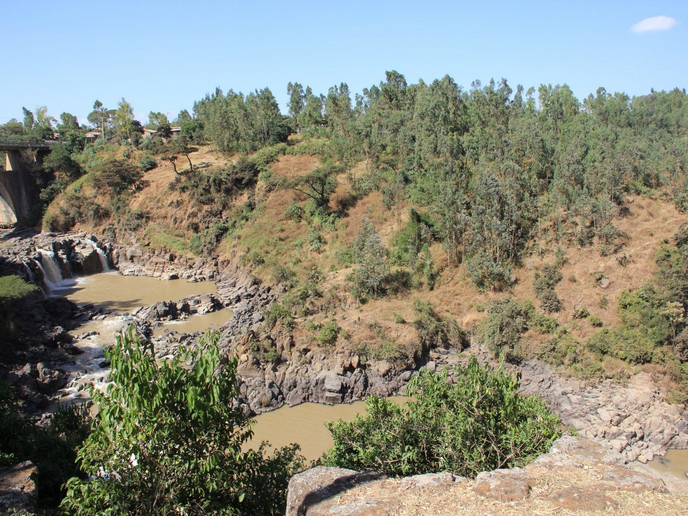
Research has most often treated humans’ habitat adaptations to their environment as a passive response to local conditions rather than a deliberate choice to occupy contrasting ‘ecological niches’, typically focusing on tool types and shapes. An integrated study linking behaviour, diet, mobility and biological responses to climate change regarding later Stone Age life in the Horn of Africa was lacking. With the support of the Marie Skłodowska-Curie Actions (MSCA) programme, the HUMA project filled that gap in a multidisciplinary study of seasonal movements between highlands and lowlands and whether those movements were part of planned land use strategies. It focused on the Beefa Cave archaeological site in the Ethiopian highlands and sites in the Somali highlands and plains during the Late Stone Age, from the Final Pleistocene to the Mid-Holocene. This period was characterised by the rise of agriculture and advanced toolkits, alongside profound global climate and environmental shifts.
Integrated analysis of human adaptation to different environments
According to MSCA global fellow Giuseppina Mutri, hosted by the University of Florence(opens in new window) and the University of Connecticut(opens in new window), “Short term seasonal use – recurrent, predictable movements to exploit seasonal resources – is a behavioural strategy that can leave archaeological signatures different from those of permanent occupation.” Signatures that may differentiate these uses include toolkits and organic residues from plants, animals and humans. The HUMA project explicitly integrated methods to capture both seasonal behaviours, such as specialised toolkits or seasonal foods, as well as indications of longer-term adaptations. Mutri studied subsistence strategies at different altitudes by assessing what tools were made and how they were used (techno-functional lithic analysis). She investigated diet and craft activities using dental calculus – a source of microdebris, microbiome information and ancient DNA (aDNA). Residue evidence and microscopic plant remains further elucidated animals and plants processed. Its lithic, residue, dental calculus and archaeobotanical data was integrated with palaeoclimate data, correlating it in an interpretative model to explain human responses to sudden climatic changes (seasonal versus long-term adaptation). “HUMA produced a high-resolution picture of what people did, what they ate, how they moved and how these behaviours relate to climate variability – including evidence for seasonal niche use and the role of highlands as attractive refuges or resource zones during climatic shifts,” Mutri explains. Analyses and publications are ongoing.
Overcoming challenges and leaving a legacy for future research
The project benefited from very rich empirical evidence: the Beefa Cave discovery and excavation in 2019; additional curated remains (anticipating low aDNA preservation); and the excellent archival collection at the Florentine Museum and Institute of Prehistory(opens in new window). The project also obtained permission to study Somali and Ethiopian materials. Beyond scientific outputs, Mutri and her team have left a legacy of practical and human resources. A relational database and a reference collection of experimental residues and use wear will be made openly accessible and FAIR-compliant. HUMA also trained Ethiopian students and scholars, contributed to the Melka Kunture(opens in new window) archaeological museum and engaged local schools. The HUMA project has filled a critical gap in the understanding of mobility, seasonal land use and human resilience in the Horn of Africa during the environmental and climatic shifts of the Final Pleistocene-Mid Holocene period. Its outputs will support future research and understanding of these interrelated processes in prehistoric Africa and beyond.