Sustainable natural pigment keeps salmon farmers in the pink

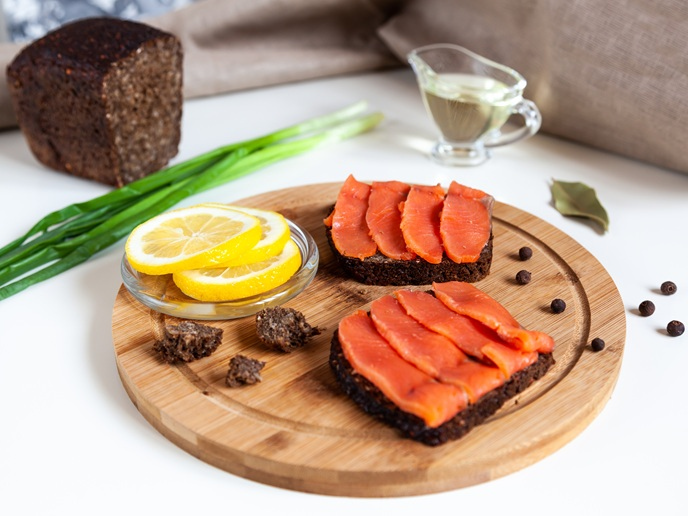
As global demand for seafood continues to grow, the aquaculture sector has become a significant element in the supply of high-quality animal protein and omega-3 fatty acids. Yet challenges remain. To meet market expectations, salmon farmers need to add astaxanthin to feed. In the wild, this reddish antioxidant is produced by aquatic microorganisms in response to stress, and accumulates in the food chain to give salmon their characteristic pink colour. “Producing and extracting astaxanthin from natural sources (such as algae or crustaceans) remains costly and difficult to scale for the volumes required for the salmon industry,” explains ASTEASIER project coordinator Matteo Ballottari from the University of Verona(opens in new window) in Italy. “As a result, around 90 % of the astaxanthin used for feed is produced from petrochemical sources, which raises sustainability concerns.” And while synthetic astaxanthin is not approved for human consumption in the EU, it reaches consumers indirectly when used in feed for salmon.
Exploiting patented microalgal strains
The ASTEASIER(opens in new window) project, supported by the European Innovation Council(opens in new window), sought to address this problem using microalgae engineered to more efficiently produce natural astaxanthin. It builds on earlier work funded by the European Research Council through the SOLENALGAE and ASTEASY projects. “Our strains produce astaxanthin even under non-stress conditions. This helps to reduce costs, which is a major barrier for natural astaxanthin penetration in the market,” says Ballottari. The key aim of ASTEASIER was to scale up biotech production and demonstrate the market feasibility of this approach. A4F, a major European microalgae cultivation company, was brought on board to facilitate industrial-scale production. The project consortium also included aquafeed production company BIOMAR, which validated ASTEASIER products through fish trials. “Finally, venture builder DAY ONE was involved in business development,” adds Ballottari. “We wanted to construct a complete innovation pathway, from patented strains and laboratory validation to the creation of a dedicated spin-off company.”
Dedicated spin-off company launched
The production of natural astaxanthin was successfully demonstrated at industrial scale, while farm trials confirmed satisfactory pigmentation levels. The carbon footprint of natural astaxanthin production was also shown to be significantly lower compared to synthetic production. After reaching its completion at the end of 2024, ASTEASIER launched a dedicated spin-off company, which was subsequently selected and supported by FoodSeed(opens in new window), the Italian food tech accelerator. “This validates the market potential of the project and will support our transition towards an investment-ready start-up,” notes Ballottari. The company is currently looking to finalise industrial partnership agreements to start production and complete the necessary authorisation processes to enter the market. “We are also fundraising to continue our entrepreneurial adventure,” adds Ballottari.
Nutraceuticals, cosmetics and animal health
ASTEASIER’s first commercial priority is to supply natural astaxanthin-rich biomass or extracts to aquafeed manufacturers. This will enable them to replace or reduce synthetic astaxanthin while offering salmon farmers a more sustainable and naturally derived pigmentation solution. However, Ballottari also believes that making natural astaxanthin more scalable, sustainable and cost-competitive could unlock applications beyond aquaculture. Sectors such as nutraceuticals, cosmetics and animal health for example could benefit by replacing synthetic pigments with natural ones. “In addition to aquafeed, the same technological platform can be applied to other high-value markets where natural astaxanthin is already recognised as an attractive ingredient,” remarks Ballottari. “For example, natural astaxanthin is valued for its strong antioxidant properties and potential benefits in areas such as skin protection, anti-ageing, oxidative stress reduction and general health support.”