


Horizon is powering the EU’s biotechnology industry, from innovation to investment


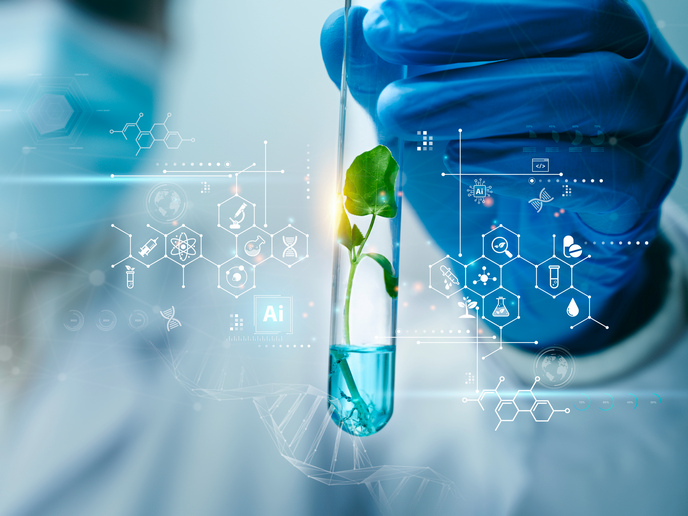
Biotechnology is recognised as a strategic technology for Europe’s long-term competitiveness. It underpins some of the Union’s fastest-growing innovative industries, contributing close to EUR 40 billion annually(opens in new window) to the economy, with health biotechnology alone accounting for more than 80 % of this value. Over the last decade, the biotechnology sector has grown more than twice as fast as the overall EU economy. Biotechnology is central to achieving the EU’s long-term economic, technological and sustainability objectives, and to enhancing Europe’s strategic autonomy in critical value chains spanning health and medical technologies, agriculture, blue economy, energy, industrial production, chemicals and materials, natural resources management and more. To maintain its momentum, the EU Competitiveness Compass(opens in new window), Strategic Technologies for Europe Platform(opens in new window) (STEP) and Commission Recommendation on critical technology areas for the EU’s economic security(opens in new window) all highlight the need to support biotechnologies as key to the EU’s economic security and global competitiveness. In December 2025, the Commission proposed the European Biotech Act(opens in new window) to boost the sector’s competitiveness, with a focus on health. The Act builds on existing strategies and initiatives supporting research and innovation scale-up in biotechnology and biomanufacturing, for instance, on the EU life sciences strategy(opens in new window), the new EU bioeconomy strategy(opens in new window), the Biotechnology and Biomanufacturing Communication(opens in new window), the Clean Industrial Deal(opens in new window), and the dedicated policy window for Health and Biotech, Agriculture, and Bioeconomy within the European Competitiveness Fund(opens in new window). It also builds on the new EU bioeconomy strategy(opens in new window), which aims to replace fossil‑based resources with sustainable biological ones to build a circular, climate‑neutral economy and is essential to the EU’s transition to climate neutrality by 2050, while combating biodiversity loss and pollution. In addition, the strategy for a competitive and sustainable EU bioeconomy(opens in new window) aims to capitalise on the biotechnology revolution, complementing initiatives such as the Vision for Agriculture and Food(opens in new window), European chemicals industry action plan(opens in new window) and European water resilience strategy(opens in new window). The European Biotech Act II, expected in the third quarter of 2026, will aim to strengthen the broader biotechnology ecosystem and ensure a competitive internal market for all areas of biotechnology.
How EU investment accelerates industrial innovation
Horizon Europe provides the overarching framework for the EU’s investment in biotechnology research and innovation in health and medical technologies, agriculture, food and feed, blue economy, energy, industrial production, chemicals and materials, and clean and resource-efficient applications in domains such as water resilience. Within Horizon Europe, Pillar 2 invests in collaborative research and innovation projects for all biotech sectors through a consortium approach. These projects tackle the most pressing challenges in industrial biotechnology and biomanufacturing(opens in new window), blue biotechnology and agri-food biotechnology, as well as health biotechnology. Complementing the Results Pack on Health Biotechnology, this new Pack showcases how the EU’s Horizon programme benefits from a model under which the results of curiosity-led frontier research, supported by the European Research Council(opens in new window) (ERC), can effectively progress to market-oriented technologies and ventures, through the European Innovation Council(opens in new window) (EIC) programmes, contributing to a robust EU deep-tech innovation ecosystem. From edible batteries to bones made of silk, the projects highlight how EU‑funded research is delivering the scientific foundations, technological platforms and evidence needed to advance Europe’s leadership across many fields through biotechnology. A key application of biotechnology is healthcare. The GPSorganoids project developed new platforms to study neuromuscular disease, while the EarDiTech project created a diagnostic test to identify hidden hearing loss. Boosting the reach of vaccine programmes, BuBbleGun developed needle-free injection methods, while GLOBEVAC’s protective encapsulation can preserve vaccines where cold chains are fragmented. Also addressing global health, ECLIPSE developed a highly sensitive, portable assay for the detection of infectious bacterial, viral and protozoan pathogens. SILKink and SilkPlatelet developed strong, soft bone marrow models using silk, an innovation that offers improved models for studying disease and a means to mass-produce platelets for transfusion. NANO-ENGINE aims to lower costs and boost access to immunotherapy for cancer and genetic diseases by manufacturing targeted medicines inside the patient’s own body. For safer and more sustainable technologies, ELFO developed electronics from ingredients such as onions, seaweed and toothpaste, including the world’s first edible rechargeable battery. In agriculture, PROFUSE developed growth supplements and cell lines to boost productivity of lab-grown meat, with benefits to patients suffering muscle loss due to age and medications such as GLP-1. 3P-Tec worked on a breeding method that can combine traits from three plants in a single crossing event. ASTEASIER developed improved microalgal sources of astaxanthin, a critical nutrient in aquaculture feed. Addressing environmental impact, LeDNA applied environmental DNA sampling techniques in lakes to assess the loss and redistribution of biodiversity, while CEBREWA created a soil stabilisation technique using limestone-secreting bacteria, reducing the need for environmentally damaging chemical cements.


