Improved muscle cells to beef up the cultivated meat industry


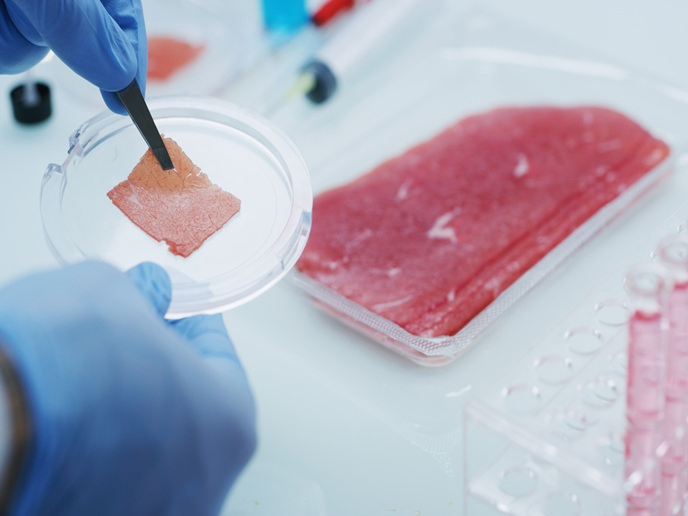
Meat production is a major source of greenhouse gas emissions, making alternative sources of protein a powerful tool in the EU’s transition towards climate neutrality(opens in new window). Demand for cultivated meat is growing, but on the supply side significant challenges remain – production costs are high, processes are hard to scale, and many products still struggle to reproduce the texture, flavour and nutrient profile of conventional meat products. The PROFUSE(opens in new window) project, supported by the European Innovation Council(opens in new window) (EIC), set out to solve these challenges by focusing on muscle tissue. The project developed two technologies for cultivated meat companies, one to help muscle grow faster, and the other to provide a reliable, non-genetically modified organism source of beef muscle cells. “Cultivated meat has three big challenges ahead of it: cost parity with farm-grown meat, scale-up, and quality and taste,” explains Guy Nevo Michrowski, project coordinator of PROFUSE. “We specialise in enabling technologies for growing muscle. Steak is muscle, chicken breast is muscle.” The PROFUSE project builds on earlier work funded by the European Research Council(opens in new window) (ERC) through the SuperFusion project, which worked on a method to induce muscle fibre formation for industrial meat production.
Helping muscle cells mature faster
The project worked on cell lines, cultivation methods, artificial intelligence-based analysis and media supplements (ingredients added to the nutrient-rich liquid used to grow cells). One of its key products is PROFUSE-S1, designed to help young muscle cells become fully mature muscle fibres much faster and more efficiently. This is crucial because muscle fibre is what gives meat as we know it much of its texture, structure and protein content. During the project, the team advanced a second generation of this supplement – PROFUSE-S2. “The main goal was not just to do everything on a 2D surface, but to test it in a 3D system that more closely mimics how cultivated meat would be produced in a factory and how a steak looks on the plate,” says Michrowski. The project also focused on a bovine muscle cell line adapted for cultivated meat production without genetic modification. The aim was to give producers a reliable source of beef muscle cells that could be grown at scale. ProFuse, the company coordinating the project, focused on myoblasts: precursor cells that grow into muscle – to mimic the texture and flavour of meat, unlike fibroblasts (connective tissue precursors) or embryonic stem cells that some cultivated meat producers use.
Testing the technology in industry
A large part of PROFUSE involved taking the technology beyond ProFuse’s lab. The team worked with several cultivated meat producers to test the supplement and the bovine cell line in their own production processes. One collaboration, with cultivated meat company SuperMeat, showed a reduction in production costs. The supplement helped the customer save time, accelerate the maturation of cells into functional muscle tissue, and significantly increase overall muscle yield, ultimately reducing the production cost per kilogram. The bovine cell line was also tested with a large customer in the Netherlands, where ProFuse says the initial adaptation was successful. The initial phase of the collaboration successfully demonstrated cell adaptation, laying the groundwork for future integration as production timelines align. At the same time, ProFuse adapted its PROFUSE-B8 cell line to grow in a serum media, and tested how well the cells formed muscle on structures designed to support tissue growth.
Entering the next phase
PROFUSE helped prepare the products for commercial use, developing product and licensing models, providing customers with the complete regulatory safety-dossier, mapping potential partners and suppliers, and beginning customer proof of concept work to demonstrate where the technology could save time and cost. The cultivated meat market is still maturing, but ProFuse estimates a total available market of EUR 22 billion by 2050. The technology could also reduce the environmental footprint of food production, a key aim of the EU’s farm to fork strategy(opens in new window). In the meantime, the team is applying its muscle-growth expertise to drug discovery and dietary supplement discovery, hoping to address muscle loss associated with GLP-1 drugs. This work could eventually feed back into cultivated meat, since the underlying challenge remains the same: growing muscle more effectively. “Anything that we discover now that can help protect muscle and grow muscle can be used again in cultivated meat,” Michrowski concludes.