Investigating the potential of legal rights for nature

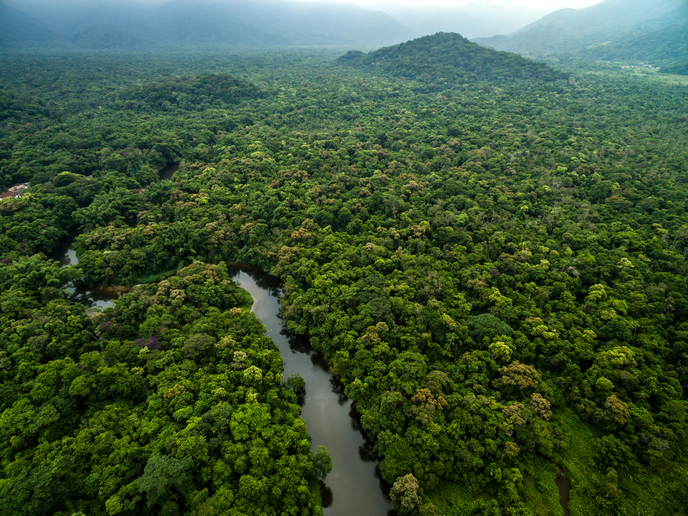
Around the world, an increasing number of rivers, forests and ecosystems are being imbued with legal rights. This legal framework, called ‘Rights of Nature’ (RoN), recognises the right of natural bodies to exist for their own sake, and not just for their value to humans. “At the core, RoN is to shift ecosystems, rivers, forests, out of the category of ‘otherness’ and into the category of ‘we/us’,” explains Jingjing Wu(opens in new window), associate professor in EU & International Law at the University of Southern Denmark(opens in new window). This emerging concept holds great potential for the conservation of nature, in a world rife with environmental problems. Yet there remains a crucial gap in understanding the legal viability and efficacy of these rights. “For this shift to deliver tangible benefits, legal systems need workable rules for questions such as who can speak for nature, how RoN claims are enforced, and how institutions can actually act on them,” adds Wu. Through the HRoN project, which was funded by the Marie Skłodowska-Curie Actions(opens in new window) programme, Wu and her colleagues sought to close this knowledge gap, to investigate RoN’s apparent disparity of efficacy across jurisdictions and nations. The project used interdisciplinary methods and conducted case studies in America and Oceania, with the view to guiding the EU’s decision-making in the near future.
Exploring the legal conditions that make Rights of Nature work
Throughout the project, Wu’s theoretical work built towards one overarching question: When a legal system grants nature rights or personhood, what legal conditions actually makes that grant work or not work? Her first published piece(opens in new window) looked at Ecuador – the first country in the world to write RoN into its constitution. The article examined, through the 2021 Los Cedros Forest case, how the law is built on Indigenous spiritual concepts such as ‘Pachamama’ (Mother Earth) and ‘sumak kawsay’ (living in harmony with nature). “This showed that this kind of spiritually grounded reasoning behaves very differently from ordinary legal reasoning, in that it cannot be weighed against competing rights or reasoned away by new evidence,” explains Wu. “That’s powerful for protecting nature, but it also creates real unpredictability in court, since the outcome ends up resting heavily on individual judges’ world views or preferences.” Her second piece(opens in new window) explored the practical question of how to let Indigenous communities speak for nature, when their voices are so often dismissed. “Using cases spanning Brazil, Australia and Ecuador, this set out what genuinely respectful engagement with Indigenous voices would require.” A third piece currently under review develops a more formal legal test tying together these insights.
Towards a formula for European Rights of Nature
As of early 2025, over 540 RoN and related initiatives have been recorded worldwide. Yet within the EU only Spain has adopted related provisions at the national level. “That gap between global momentum and European caution is where the project’s contribution is most relevant,” notes Wu. “European institutions often argue that RoN lacks conceptual rigour, and HRoN demonstrates what a legally rigorous and normatively responsible RoN law could look like.” Another highlight was an international symposium, combining the latest research with innovative and immersive workshops in which participants used natural elements to connect with their inner selves. Wu’s work will continue along several avenues, including through a new 5-year grant exploring how RoN can inform us about deep-sea mining regulation. “This is an area where we know almost nothing about, let alone how to regulate,” says Wu.