Revolutionary AI biomarker improves colorectal cancer treatment decision-making

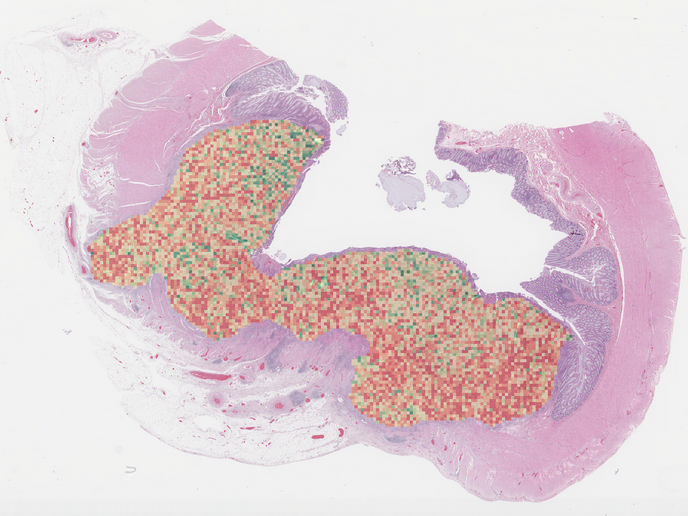
Colorectal cancer is the second most common and third most deadly(opens in new window) cancer in Europe. About half of patients are diagnosed with stage II or III disease, where the first line of treatment is surgical tumour removal. The majority of these patients, particularly in the case of stage III cancer, also receive adjuvant chemotherapy(opens in new window) to reduce the chance of relapse – but with no benefit, experiencing only side effects. Better tools are needed to predict which patients will benefit from this toxic treatment. The EIC-funded Histotype Px(opens in new window) project, coordinated by a Norwegian company, is commercialising an AI-based biomarker that analyses digital images of tumour tissue to help oncologists decide which patients can safely skip adjuvant chemotherapy and which truly need it.
Significant health, resource and cost benefits
Current risk-stratification methods, including tumour staging and multi-gene tests, lack the accuracy to guide treatment decisions reliably. Circulating tumour DNA (ctDNA)(opens in new window) tests are promising and increasingly used in the United States but remain rarely used in Europe – partly because they are still costly, slow and prone to false negatives that require repeat testing. The project used deep learning to enable prediction of patient outcomes directly from resected tumour slides. “Histotype Px® Colorectal needs no new samples or equipment, delivers results in minutes on a hospital’s existing digital pathology system and outperforms established prognostic tests,” explains project coordinator Andreas Berg Storsve of DoMore Diagnostics. It could relieve 250 000 patients a year worldwide from unnecessary, toxic adjuvant chemotherapy while saving billions of euros in healthcare costs.
Clinical, technological and regulatory successes
“Clinical validation studies across hospital settings in Europe, Japan and the US have been completed and presented at leading oncology and pathology congresses in Europe and the US,” Storsve explains. In a Japanese cohort of over 900 ctDNA-negative patients, Histotype Px® separated survivors into low-, intermediate- and high-risk groups and caught two-thirds of the recurrences that ctDNA testing had missed. Furthermore, a combination of the two tests predicted a lack of treatment benefit in ctDNA-negative low-risk patients. Data from studies with Histotype Px® used on a stand-alone basis showed similarly clear risk separation. Importantly, a US study indicated that high-risk patients gained a clear survival benefit from adjuvant chemotherapy, with low-risk patients showing none. The project supported the development of the world’s first and only CE-marked and ISO 13485-certified AI-based biomarker to guide adjuvant treatment decisions in colorectal cancer. It has also generated seven new patents so far. Submissions to Dutch, US and UK regulators are scheduled for 2027.
Globally applicable and complementary to ctDNA testing
The biomarker demonstrated consistent performance across countries, hospitals and laboratories. In addition, ctDNA testing emerged as a natural partner rather than a rival, with the developed solution sharply reducing false-negative rates in patients who tested negative. “The resected tumour slide holds the information needed to understand the tumour’s malignancy potential and guide treatment decisions,” says Storsve. Until now, doctors have lacked the tools to analyse that information. By identifying who truly needs adjuvant chemotherapy, the Histotype Px project could support more precise, less toxic colorectal cancer care and improved patient outcomes worldwide.