Mapping bird-plant interactions in the East Caribbean

Despite their relatively small size, the Caribbean islands host some of the world’s most unique endemic species: about 72 % of its native seed plants(opens in new window) are found nowhere else on Earth, and 2.9 % of the world’s endemic vertebrate species(opens in new window) have made their home on one of its islands, ranking the region among the world’s top biodiversity hotspots. However, this privilege comes at a cost: human activity and natural disasters are placing a heavy burden on Caribbean ecosystems, leading to high extinction rates and biodiversity loss. Funded by the Marie Skłodowska-Curie Actions programme, the IslandNet project set out to study animal-mediated ecosystem functions in the East Caribbean. The knowledge generated would help assess the resilience of these island ecosystems to continued biodiversity loss and facilitate prediction of how ecological communities at large may respond to environmental changes.
A bird-centred approach
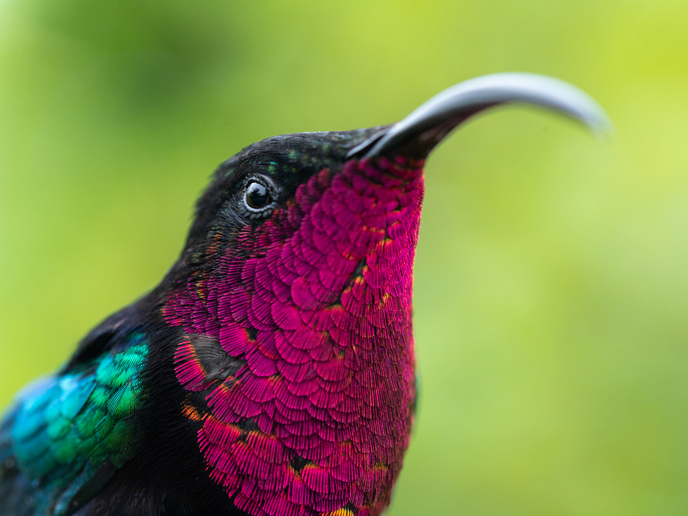
IslandNet used birds to carry out its research, focusing on two crucial ecosystem functions: pollination and seed dispersal. Both are vital for healthy and biodiverse ecosystems, and birds play a crucial role through their interactions with plants. “Birds are among the most important vertebrate seed dispersers and pollinators, particularly in the tropical Americas, where hummingbirds can be very abundant,” says project coordinator Maximilian Vollstädt, Marie Curie fellow at the Spanish National Research Council. Avian species are particularly important on islands as they are highly mobile, facilitating pollination and seed dispersal not only within one island but also across neighbouring islands. IslandNet collected empirical data from 11 sites: the two continental islands Trinidad and Tobago, and nine oceanic islands of the Lesser Antilles. Birds were temporarily captured using mist nets and placed in individually labelled bags, allowing the team to collect seeds that were regurgitated or defecated. The researchers also collected pollen from beaks and feathers, took DNA samples, and measured morphological traits such as bill length, gape width and body weight. A small blood sample was also taken, and then the birds were released unharmed. Simultaneously, the project collected data from local plant communities: the team measured flower and fruit availability, and gathered information on flower, fruit and seed traits. It also collected pollen and seeds directly from plants to create a reference database. In the laboratory, the pollen and seeds were compared against the reference collections. “DNA screening allowed us to identify almost all samples to species level,” says Vollstädt. The data collected provided a better understanding of how species interact at the community level, which species play key roles, and which may be particularly vulnerable. “Ultimately, this can help us develop more targeted conservation strategies based on empirical data,” emphasises Vollstädt.
Key insights into endemic island populations
Despite logistical and physical challenges – such as obtaining sampling permits across different nations with varying regulations and keeping the birds safe under extreme weather conditions and from predators – IslandNet shed important light on the species dominating East Caribbean ecosystem dynamics. Significant insights have already been published in notable journals such as that of the New Phytology Foundation(opens in new window) and the British Ecological Society(opens in new window), with a few more studies currently in review or pending publication. “With our work, we hope to inspire future studies and reveal key insights into the ecological communities of these fascinating islands,” concludes Vollstädt.