Accelerating discovery of novel treatments for rare diseases

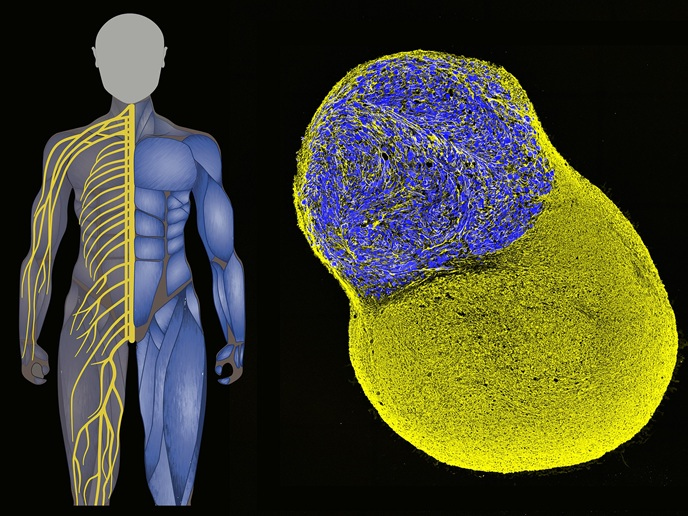
Since its launch in 2023, the EU-funded DREAMS(opens in new window) project has been working on cutting-edge methods and tools that will be used to find new treatments for rare neuromuscular disorders with no known cure. The DREAMS team has now become stronger with the addition of University College London (UCL), a world leader in biomedical research and regenerative medicine. UCL has officially joined the project to contribute its scientific and clinical expertise in neuromuscular disorders, stem cell research and data-driven discovery. Rare neuromuscular disorders present significant challenges to patients and health systems across Europe. Those affected often face prolonged diagnostic journeys, sometimes spanning years, that can result in irreversible muscle degeneration and reduced quality of life. Additionally, the rarity of these conditions hampers clinical research and drug development, leaving many patients without approved therapies. DREAMS is addressing these challenges by combining AI-based drug discovery, stem cell data and advanced phenotypic screening to speed up the discovery of promising therapeutic candidates. Its focus is on five rare neuromuscular diseases: centronuclear myopathy, Duchenne muscular dystrophy, Emery-Dreifuss muscular dystrophy type 2, Pompe disease and Danon disease. These diseases may affect patients differently, but they all involve defects in muscle cell organisation and energy processing. DREAMS is studying them together through induced pluripotent stem cell (iPSC) models in order to find treatments that can target common pathways and benefit multiple patient communities.
What UCL brings
By joining the team, UCL contributes its expertise in generating high-quality patient-derived iPSC lines for additional neuromuscular diseases, expanding the diversity and robustness of DREAMS’ experimental models. It also shares its advanced muscle differentiation and cellular modelling capabilities, essential for analysing disease mechanisms and validating biomarker signatures. Further contributions include its specialised assays to test drug efficacy and mechanisms of action, and its deep clinical and scientific knowledge of neuromuscular disorders. These all strengthen DREAMS’ capacity to identify shared disease mechanisms and translate findings to new therapies. “We are delighted that UCL is joining the DREAMS consortium to advance research into rare neuromuscular disorders,” remark UCL researchers Francesco Saverio Tedesco and Sara Benedetti in a news item(opens in new window) posted on the project website. “This collaboration allows us to combine UCL’s expertise in stem cell modelling, disease phenotyping, and advanced therapies with the consortium’s collective strengths. By harnessing our strategic partnerships with the Francis Crick Institute, the NIHR Great Ormond Street Hospital Biomedical Research Centre and the MAGIC(opens in new window) consortium, we aim to accelerate the translation of cutting-edge science into meaningful therapies for patients.”
Showcasing next-gen research
In November 2025, DREAMS (Drug REpurposing with Artificial intelligence for Muscular disorderS) researchers presented the project’s achievements at the 22èmes Journées de la Société Française de Myologie(opens in new window) conference held in Aix-les-Bains, France. DREAMS contributions included a talk offering insight on what connects different myopathies at the molecular level and a poster summarising the project’s structure, goals and methods. The event provided a platform for exchanging valuable knowledge, bringing the project one step closer to delivering novel treatments for rare neuromuscular disorders. For more information, please see: DREAMS project website(opens in new window)