Trees beyond the forest: the strategic sentinels of the drylands

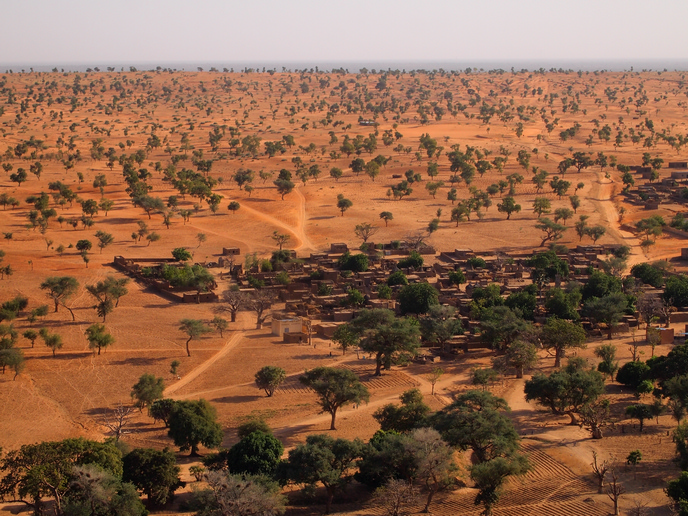
When people picture forests, they often imagine dense stretches of woodland. But across the world’s drylands, from Africa to India, many important trees stand alone. Scattered across farms, grasslands and semi-arid landscapes, these isolated trees have long been largely invisible to science. Now, researchers working on the ERC-funded TOFDRY(opens in new window) project are changing that using AI and ultra-high-resolution satellite imagery to map individual trees across vast dryland regions for the first time. The findings are reshaping how scientists understand dryland ecosystems and highlighting the overlooked importance of trees growing outside forests. “In Europe the landscapes are very managed and a majority of the trees are in dedicated forest areas,” said Dr Martin Brandt, principal investigator of the project and a geographer at the University of Copenhagen(opens in new window). “This is different in drylands, where trees grow scattered in almost all landscapes.” Drylands cover around 65 million square kilometres(opens in new window) of Earth’s land surface, yet surprisingly little is known about the trees growing there. “Single trees are too small to be detected in traditional satellite images, so most global maps simply do not include them,” Brandt explained. “But they are an integral part of people’s livelihoods and nutrition, and they prevent soil degradation and fertilise fields.”
Seeing trees individually
Rather than measuring forest cover as a whole, TOFDRY studies trees as individual organisms. Researchers can now identify trees one by one using deep-learning AI systems trained to recognise them as objects. “AI is clever enough to understand the concept of what we humans define as a tree,” Brandt said. “That allows us to scale, because we would need hundreds of years for what AI can do in seconds.” The work has already produced a global map of dryland trees. This is a major achievement that could improve climate models, restoration efforts and conservation strategies worldwide.
Trees that support lives
These trees provide far more than shade. Across drylands, they are used for food, medicine, fuel, construction materials and animal shelter. Their roots stabilise soils, while leaves and organic matter help enrich farmland naturally. Especially important is agroforestry – maintaining trees within agricultural fields. “Agroforestry is a nature-based climate solution that promises benefits for all sides,” Brandt noted. As climate change intensifies droughts and extreme weather, these trees may become even more important for vulnerable communities. “If yields fail, trees may still provide fruits that can be eaten or sold,” he explained. Yet human activity is also putting many dryland trees under pressure. In India, TOFDRY researchers found that have millions of farmland trees(opens in new window) have disappeared as agriculture became increasingly mechanised. The findings attracted widespread attention and helped prompt legal action(opens in new window) to protect the remaining trees.
Changing perceptions
For Brandt, one of the project’s biggest achievements has been changing how people think about drylands themselves. “Our work has certainly raised a lot of awareness that drylands are not deserts,” he said. “There are trees, and those are important and worth mapping and protecting.” Researchers hope that by making these previously overlooked trees visible, policymakers and local communities will be better equipped to protect them. “If we are able to map single trees, we are also able to protect them,” Brandt emphasised.