Growing greener, fairer cities across Europe

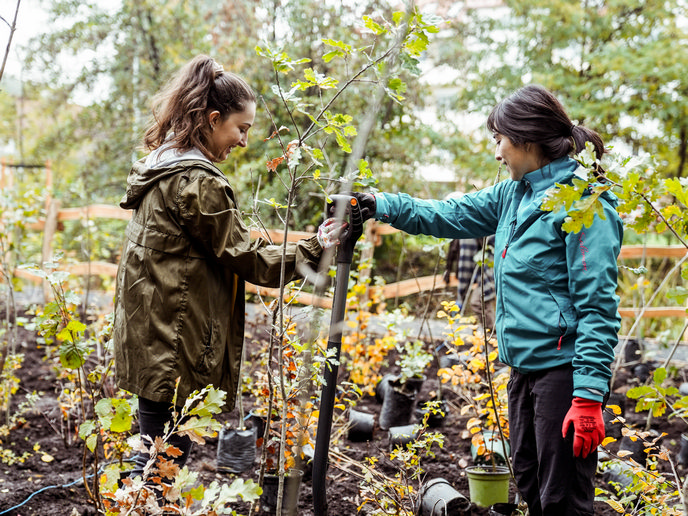
Cities cover a small fraction of the Earth’s surface but are estimated to account for a large proportion of global CO2 emissions. Within them, access to clean air, cool shade and green space is often unevenly shared, with wealthier neighbourhoods benefiting most, while more vulnerable communities face greater exposure to heat and pollution. The EU-funded JUSTNature(opens in new window) project aimed to close this gap, based on the idea that all citizens have a right to access ecological space. To do this, the project turned to nature-based solutions (NbS) – interventions such as green roofs, urban gardens and permeable green surfaces that use natural processes to cool cities, capture carbon and clean the air. “By linking ecological value with equitable distribution and inclusive design, NbS [JB1.1]become tools to jointly address climate goals and social justice,” explains project coordinator Jessica Balest.
Co-designing greener cities with residents
The JUSTNature project tested this approach in seven European city practice labs: Leuven (Belgium), Munich (Germany), Chania (Greece), Merano and Bolzano (Italy), Szombathely (Hungary) and Gzira (Malta). These acted as real-life laboratories where residents, local authorities and researchers worked together through a series of workshops and community engagement activities. In Leuven, residents helped redesign a street through discussions on traffic safety, accessibility and urban greening. In Szombathely, even schoolchildren were involved through role-play and serious games to rethink how their schoolyard could support biodiversity. “The city practice labs ensured that local knowledge, needs and aspirations directly informed the planning, implementation and long-term stewardship of NbS,” says Balest. The project implemented several NbS(opens in new window) across the pilot cities, improving air quality and biodiversity, reducing heat and creating more liveable public spaces. A detention centre yard in Leuven turned from sealed concrete into a permeable green space built together with detainees. In Munich, a paved courtyard was transformed into a shaded community garden within a multicultural housing project. In Bolzano, an underused rooftop became a green space combining biodiversity with solar panels. In addition, what was first an underused area in Merano turned into a public garden co-designed with citizens, featuring pollinator habitats, edible plants and shaded seating areas.
Tools and pathways for lasting impact
Beyond individual interventions, JUSTNature developed resources so other cities can lead similar transformations. These include JUSTPlanT(opens in new window), a method kit to help local authorities and citizens plan NbS collaboratively, and a handbook(opens in new window) with lessons on equitable urban greening. The project also developed a suite of digital tools to support cities in assessing, implementing and scaling NbS. These include a collaborative governance platform, a digital twin for modelling the impacts of NbS and environmental monitoring systems. Cities across Europe worked to embed NbS into local policies, planning processes and investment strategies. In Bolzano, the experience gained through JUSTNature fed into the Reduction of Building Impact Regulation (known locally as RIE – Riduzione dell’Impatto Edilizio), integrating nature-based approaches into future urban development. An entrepreneurial activation process across all seven city practice labs brought together businesses, SMEs and community organisations to identify opportunities for a nature-based economy. “City administrations strengthened their knowledge and capacities through peer-learning and co-creation activities,” says Balest. “This has enabled them not only to maintain the solutions implemented during the project, but also to identify opportunities for future investments, replication and scaling-up of NbS beyond the project lifetime.”