Pinpointing the barriers blocking Europe’s sustainable food transition

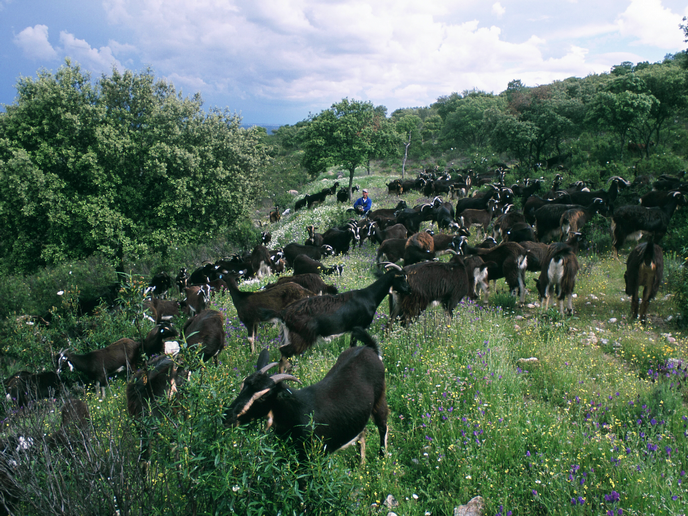
Across Europe, farming systems face mounting pressure from soil degradation, water scarcity and biodiversity loss. To mitigate these environmental threats to Europe’s food supply, policymakers and businesses need to turn their attention to more sustainable practices. The EU-funded project VISIONARY(opens in new window) set out to improve understanding of what shapes the decisions of farmers, consumers and food businesses. Working across eight countries and multiple environmental challenges, it combined choice experiments (a survey method used to understand what people value most rather than asking directly) with a systems approach that considers the whole agri-food value chain.
New lens on food system behaviour
“Most research into food system change focuses either on individual behaviour or on broader structural conditions – rarely both at once,” says Dionisio Ortiz Miranda, project coordinator and professor at the Polytechnic University of Valencia(opens in new window). VISIONARY ran choice experiments in Germany, Denmark, Spain, Hungary, Italy, Poland, Romania and the UK covering environmental challenges related to climate, biodiversity, water and organic farming. These experiments tested how specific interventions influenced the decisions of farmers, consumers and other actors. A systems-level framework captured how relationships between actors, supply chain dynamics and policy environments shape possible changes at each level. For example, in Italy and Denmark, the project examined how dairy and livestock farmers respond to different economic policy instruments for reducing greenhouse gas emissions. “Italian farmers’ acceptance of innovative voluntary carbon markets increased when these were combined with traditional subsidies. This suggests hybrid approaches can build trust by integrating innovation and familiarity,” notes Ortiz Miranda. In Denmark, farmers strongly overestimated the economic impacts of a CO2-equivalent tax(opens in new window), leading to high initial resistance to the policy. Providing expert information on predicted impacts partially reduced these misperceptions and modestly increased policy acceptance. Responsiveness was weakest among larger farms and livestock producers, as well as among those with the largest gaps between their own expectations and expert estimates.
Key lessons from eight countries
Overall, the studies(opens in new window) underscored the need to place farmers’ perspectives and behavioural responses at the centre of climate policy design for agriculture. In addition, three findings were consistent across the project’s studies, as described below. “Inadequate access to relevant information pushes people towards unsustainable decisions – but better information on its own rarely changes behaviour unless the rules and structures around decision-making also shift,” says Ortiz Miranda. Meaningful farming system transformation requires policies that consider entire agri-food value chains, not just what happens at farm level. Finally, relationships matter – approaches grounded in trust, shared responsibility and long-term partnerships between producers and consumers consistently outperformed one-off interventions.
Science and policy working together
The project found that behavioural interventions have been explored with farmers and consumers but remain rare in relation to other actors of the food value chain. “Extending these tools to the actors that mediate between farmers and consumers represents a significant opportunity for future policy instruments,” Ortiz Miranda notes. VISIONARY’s most tangible legacy may be its 16 science-policy interfaces(opens in new window) – participatory co-design platforms bringing together policymakers, scientists, practitioners and civil society groups that operate at local, regional and national levels. Covering topics from organic farming and plant-based diets to short supply chains and climate, these spaces enabled the co-design of research and the comparison of findings with real-world experience. In several cases, the work translated into concrete agreements and actions that exceeded VISIONARY’s original ambitions. The project has demonstrated that combining experimental rigour, systems thinking and genuine stakeholder engagement – with a multi-actor team from the start – does not simply produce better research. It creates the conditions for research to drive change at scale and ultimately overcome the barriers that keep food systems locked in unsustainable patterns.