Turning climate knowledge into targeted local action

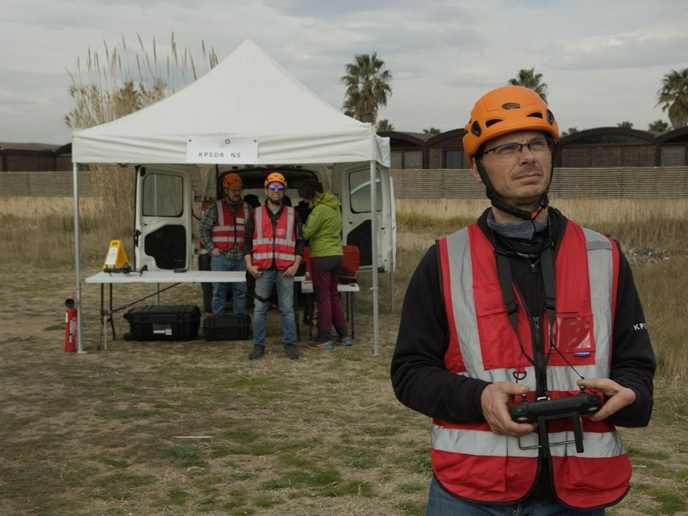
Local and regional authorities are increasingly under pressure to act on climate change impacts to protect lives and local economies. However, they often lack the tools, governance mechanisms and operational capacities to transform knowledge into concrete, long-term adaptation strategies. “A key challenge is that climate information is typically fragmented, difficult to interpret for non-specialists, and poorly connected to regional planning and decision-making processes,” explains IMPETUS(opens in new window) project coordinator Hannah Arpke from Eurecat(opens in new window) in Spain. “Scientific knowledge is not always easily accessible or actionable for policymakers, infrastructure managers, utilities, businesses or local communities.” This gap can also hold back innovation in climate adaptation, making it harder for companies to secure the funding and support needed to bring new solutions to this rapidly expanding market.
Regional Resilience Knowledge Boosters
Funded by the EU Mission on Adaptation to Climate Change(opens in new window), the IMPETUS project was designed to help European regions translate knowledge into local climate action and boost the market readiness of adaptation innovations. Rather than developing a single centralised knowledge platform for authorities, IMPETUS created seven regional Resilience Knowledge Boosters(opens in new window) located in: Catalonia, Spain; Berlin-Brandenburg, Germany; Valle dei Laghi, Italy; Zemgale, Latvia; Attica, Greece; Zeeland, the Netherlands; and Troms County, Norway. Each Resilience Knowledge Booster was composed of two key elements, the digital and the human dimension. The first involved setting up technical infrastructure to provide access to tools such as climate-relevant datasets, climate-risk assessments, and modelling and simulation capabilities. The second brought together policymakers, scientists, businesses, NGOs and local communities to co-design resilience actions and adaptation pathways. “This approach ensured that the solutions developed were not only technically robust, but also operationally relevant, locally accepted and aligned with regional adaptation priorities,” says technical project coordinator Josep Pijuan Parra from Eurecat.
Diverse climate risks and governance contexts
The project validated and upscaled 15 technical and nature-based solutions across sites chosen to reflect the specific climate needs of diverse geographic locations, territorial conditions and governance contexts. These included a pilot project in Attica(opens in new window) to treat wastewater for local non-potable use, dune monitoring methods developed in Catalonia(opens in new window) to mitigate the effects of sea level rise and marine storms on coastal erosion, a flood early warning system piloted in Zemgale(opens in new window), a water management decision support system(opens in new window) in Valle dei Laghi, and a decision support tool to aid industrial decarbonisation at Rotterdam port. The team hopes that demonstrating the efficacy and cost-effectiveness of innovative adaptation solutions under real-world conditions will help drive public and private innovation in this field, and create more opportunities to bring proven solutions to market.
Value of federated knowledge-sharing mechanisms
Project partners in the Attica, Berlin-Brandenburg and Valle dei Laghi pilots all plan to continue using the new tools and scale up the respective solutions they had been testing. The next major objective is to transform the IMPETUS approach into a scalable framework that can be adopted by other regions. This will involve expanding the Resilience Knowledge Booster concept, strengthening data-sharing capabilities and supporting regions with more limited capacities. “The project additionally demonstrated the value of knowledge-sharing mechanisms that enable interoperability and information exchange across regions,” notes Pijuan. “These results will now be taken forward in further EU climate adaptation projects such as NATALIE.”