Alternative water sources for a water-stressed Europe

Europe’s water systems face a crisis as demand grows and climate change makes traditional sources less predictable. Droughts in Europe caused losses of EUR 40 billion in 2022 alone(opens in new window), with falling river levels stifling agriculture, energy production and logistics. The summer of 2026 has provided a stark reminder of these risks: record-low Danube levels have threatened cooling water supplies for nuclear power plants in Hungary and Romania, putting pressure on electricity generation and prompting emergency measures to maintain water flows. Many impacted regions lack the resources to implement a comprehensive response – a gap that the RECREATE(opens in new window) project tackles via proactive, evidence-based water management planning. “We aim to address the growing challenge of water scarcity and climate-related pressure on regional water systems by supporting the wider, safer and more trusted use of alternative sources such as water reuse, desalination and rainwater harvesting,” explains Digu Aruchamy, programme manager at Eurecat(opens in new window), the project’s coordinator.
Digital tools to guide adaptive water planning
At the heart of the project is RECREATE_WT, an open-source platform co-created with stakeholders. It integrates climate projections, water demand scenarios, system modelling, health risk assessment and water management strategies into a single decision support tool to guide adaptive water planning. The platform is already helping evaluate future water supply and demand scenarios in the project’s four case study regions of North Holland in the Netherlands, Spain’s Costa Brava, Kalundborg in Denmark and Syros in Greece. “Our assessments provide the basis for understanding how water stress may evolve, and which alternative water resource strategies may be the most relevant,” says Marcel Gutenberger, communications expert at project partner ICLEI(opens in new window).
Local solutions for local needs
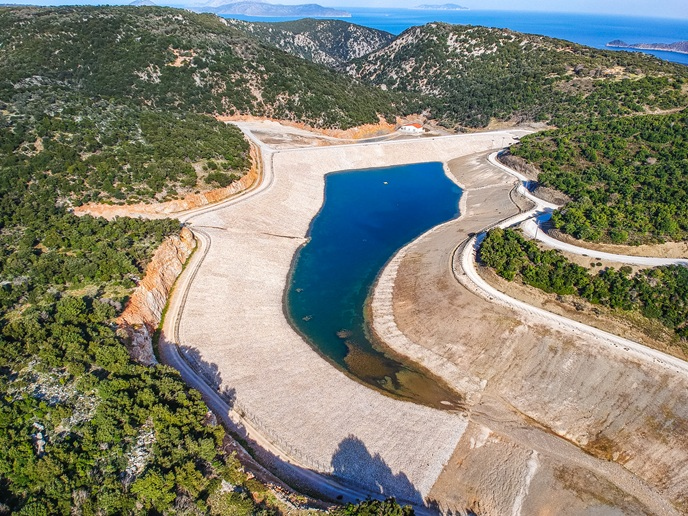
Decisions on alternative water sources involve governance, trust, regulation, economics and local priorities. That’s why, in addition to testing its platform, the project established communities of practice within each case study region. “These communities bring together stakeholders from science, policy, utilities, industry and civil society and are essential for building trust and ensuring our solutions respond to real local needs,” adds Gutenberger. The project’s comprehensive approach has already yielded important results. Partners in North Holland used RECREATE_WT to model their regional drinking water system evolution, exploring climate change, demand and water quality challenges. Authorities in Costa Brava are using RECREATE_WT to evaluate water reuse strategies, and explore the economic and environmental viability of desalination. In Kalundborg and Syros, the platform is being used to model the potential of rainwater collection and reclaimed wastewater respectively as alternative water sources. “The diversity of our case study regions may make the project more complex, but also much more valuable for replication in other water-stressed regions in Europe,” notes Aruchamy.
From demonstration to market uptake
To support market uptake of its solutions, RECREATE will conduct a comprehensive market analysis to assess the potential across its four case study regions, identifying key barriers to wider adoption as well as funding and other support opportunities. The project will also deliver actionable replication roadmaps. “RECREATE will transfer best practices and locally adapted solutions to new target regions, fostering long-term collaboration beyond the project’s lifetime,” says Aruchamy. Due to conclude in December 2027, the project is preparing a joint policy brief(opens in new window) with sister projects MARCLAIMED and AWARD.