The value of Indigenous perspectives on the more-than-human world

Many Indigenous communities view animals, rivers, mountains and forests, not simply as being of nature, but as beings in their own right. “Western societies tend to think of nature as separate to humans – to be owned, managed or protected; while many Indigenous communities view natural phenomena as beings with whom we have long-term relationships, responsibilities and reciprocal obligations,” says Selcen Küçüküstel, principal investigator of ecofem.indi. The Marie Skłodowska-Curie Actions(opens in new window) funded project investigated the implications that this perspective has for environmental considerations, as they shift focus from debates over resources, towards encounters between different ways of understanding the world and its inhabitants. “Rather than simply being vulnerable populations, Indigenous communities have valuable knowledge about living with and caring for the environment,” adds Küçüküstel. Noting the mainly male-centred perspective of classic animism(opens in new window), shamanism and human–nature relationship studies, Küçüküstel also adopted a gender lens for her research. “Ecofeminist scholars have long highlighted the links between how societies treat nature and women, but often focused on issues like access to land or women as caregivers. Recognising women as spiritual leaders helps conservation and environmental policies to become more inclusive,” notes Küçüküstel.
A dialogue between Siberia and Amazonia
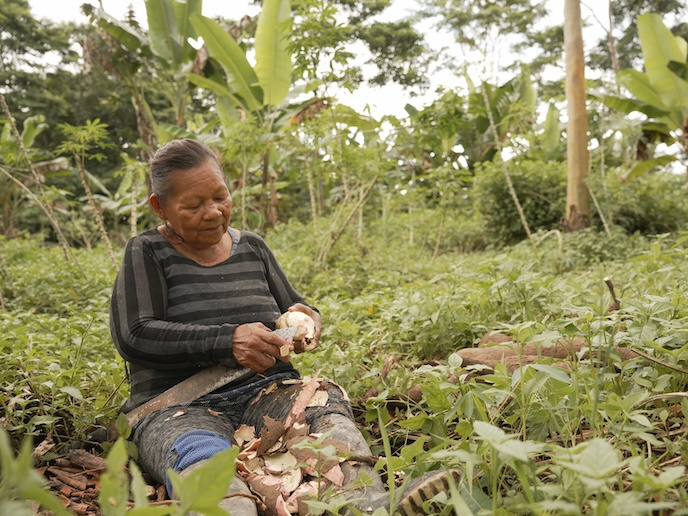
Küçüküstel drew on her previous research with the Dukha reindeer herders(opens in new window) in Mongolia, expanding it to the Colombian Amazon. “Both are fascinating anthropologically as they have inspired many environmental anthropology concepts,” remarks Küçüküstel. Küçüküstel’s ethnographic fieldwork involved living with an Indigenous Colombian Amazon family, participating in everyday life. In-depth interviews, with both women and men, complemented this participant observation, alongside focus groups with women and different generations exploring gender and the environment perspectives. Similarities were found between the two communities, with both referring to forests, mountains, rivers and animals as neighbours, relatives or beings with whom to have reciprocal relationships, for example. “My previous Siberian fieldwork helped me initiate Amazon conversations. For instance, when I told the Colombian Ticuna(opens in new window) about a sacred mountain where the Dukha ask permission from a spirit before entering, they immediately shared similar stories,” Küçüküstel notes. Visualisation methods became important to the project, with a 360-degree camera allowing participants to represent themselves and create an immersive visual documentation of everyday life and relationships.
Reaching beyond simple assumptions about women’s roles
Indigenous women telling their own stories enabled Küçüküstel to reach beyond stereotypes, towards more diverse experiences and perspectives. For example, a common research finding had been the threat of extractive industries in Indigenous territories, to forests, rivers and biodiversity but also women’s social roles, livelihoods and knowledge systems. But according to Küçüküstel: “Women often possess highly valued ecological knowledge about medicinal plants, healing, dreams and relationships with non-human beings, even if not called ‘healers’. Rather than being victims of environmental destruction, Indigenous women are influential.” Yet, despite this status at the family level, Küçüküstel still found public leadership remained largely male-dominated, suggesting that knowledge and public authority do not always coincide. “Anthropology has perhaps sometimes overlooked less visible forms of knowledge practised in more private or domestic settings. I intend to explore this further, investigating new contexts while contributing to discussions about environmental justice, education and more sustainable ways of living,” adds Küçüküstel. Küçüküstel is currently continuing to analyse her field material and prepare publications, while also planning to launch an www.livinggeographies.com (interactive multimedia platform) of field content, enabling visitors to explore Indigenous perspectives in a more engaging way.