Investigating how Amazonian plants respond to climate change

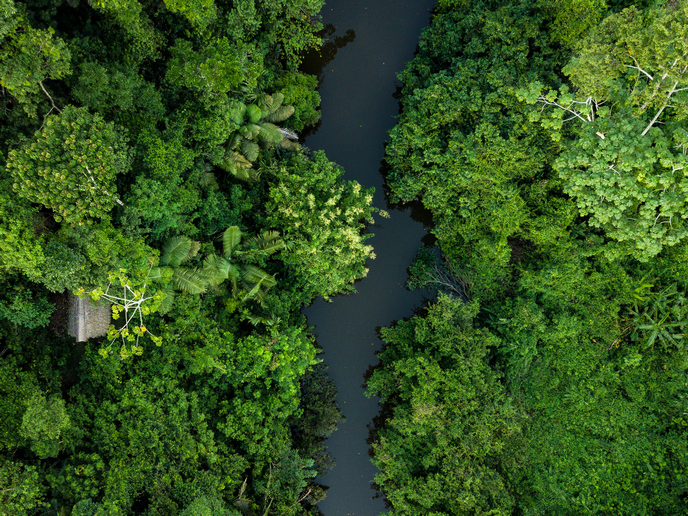
The Amazon rainforest is an irreplaceable global resource, both for biodiversity and for fighting climate change. Yet it is under increasing threat from human activity and global warming. Uncovering exactly how sensitive Amazonian plants are to changes in temperature and precipitation is vital for efforts to protect them. This is challenging, due in part to a lack of knowledge of species in a given region, and limited coverage beyond areas along rivers. “For a complete understanding of the real responses of long-lived species such as Amazonian trees, a larger dataset is required,” explains Encarni Montoya(opens in new window), tenured scientist at the Spanish National Research Council(opens in new window) (CSIC) and supervisor of the PALOMA(opens in new window) project. Fossil pollen records contain information about the dynamics of former ecosystems, which could reveal how plants responded to shifting environmental conditions in the past. Through the PALOMA project, which was funded by the Marie Skłodowska-Curie Actions(opens in new window) (MSCA) programme, researchers sought a greater understanding of the response of Amazonian plants to climate change through innovative pollen-based modelling in Ecuador and Peru.
Gathering pollen samples from across the Amazon
The first major part of the work involved building a vast dataset by gathering modern pollen samples from across the basin. This involved both collaboration with many palaeoecologists who could share published and unpublished data, and new fieldwork. The team carried out two campaigns in Peru and two in Ecuador, attempting to find the modern pollen signal that is being produced currently in different environments. “We also gathered information about vegetation from the locations sampled for pollen, and where this information did not exist, we obtained it through surveys with the ‘Instituto de Investigaciones de la Amazonía Peruana’(opens in new window) (website in Spanish),” says Dael Sassoon(opens in new window), MSCA postdoctoral research fellow at Geosciences Barcelona(opens in new window) and principal researcher. “By doing this, we know what plants are actually growing where the modern pollen was collected,” he adds. The second part of the project applied this new data to explore the relationship between modern climatic conditions and Amazonian plant species, and to model fossil pollen records from Ecuador and Peru. The idea was to systematically test the models, running the same records through different combinations of methods and datasets to see what pollen reconstructions were actually sensitive to in terms of climatic variables.
Characterising pollen signals on land and water
Thanks to modern pollen traps, the team could characterise and compare pollen signals from land and water, the main transport route in Amazonian ecosystems. “The modern pollen database is now the most comprehensive for the region,” notes Sassoon. The researchers also improved both the speed and accuracy of the modelling methods that will represent an excellent improvement for the entire Amazonian environmental community. They could characterise the temperature and rainfall tolerances of present-day taxa from the database, and have started to run modelling tests on three different records from Ecuador and Peru. “The modelling software, the methodological improvements or new approaches carried out and the vegetation data will be openly available, so the main contribution is infrastructure other people can build on,” explains Sassoon.
Expanding the modern pollen database
The researchers next hope to expand the modern pollen database into parts of Amazonia where there are still knowledge gaps, and improve the modelling methods themselves. “In a broader sense, other initiatives are still ongoing, like the monitoring of pollen production in different environments,” remarks Montoya. In this sense, other tropical locations such as the Tiputini Biodiversity Station(opens in new window), in Ecuadorian Amazonia, are instrumental for these environmental studies.