Building research capacity to address the informal economy

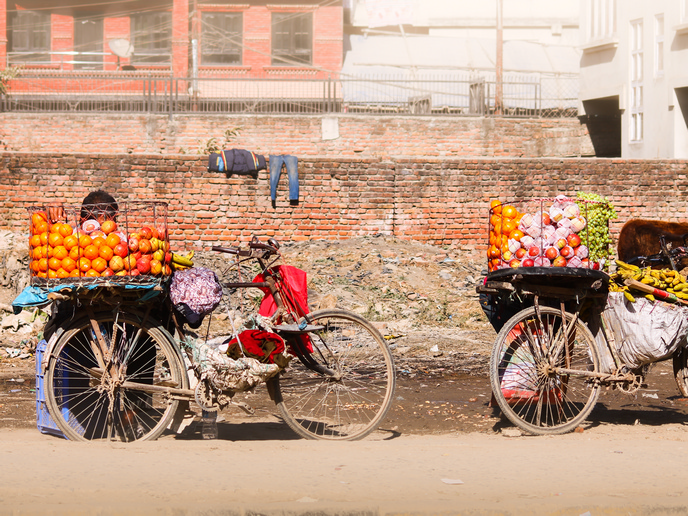
It is estimated that 2 billion people, or 61 % of the world’s employed population, work in the informal economy. While this type of work – which typically includes street vending, casual labour or small-scale enterprises – provides a crucial safety net for vulnerable populations, because it is unregulated, it can also lead to unsafe working conditions. “Most informal workers don’t receive benefits or legal protections,” explains Abel Polese(opens in new window), a senior research fellow at Tallinn University(opens in new window). “Furthermore, because this work is untaxed, governments miss out on an important revenue stream, which can hinder economic development and their ability to provide public services.” According to Polese, in many parts of the world, governments lack the ability to effectively address informal employment and the vulnerability that comes with it. “This is largely due to a lack of local specialists,” he says. This is where the EU-funded LABOUR(opens in new window) project comes in. With a focus on South-East Asia, the project set out to train and develop a global team of specialists on informal employment. “By gathering a team of 16 participants that includes academic and non-academic partners working on labour insecurity, we not only looked to produce specialists on the topic and on the region but also to propose concrete mitigation measures that can be taken into account by decision-makers and development organisations,” adds Polese, the project’s principal investigator.
Building capacity through international exchanges
With the aim of enhancing the capacities of both European and Asian researchers, the Marie Skłodowska-Curie Actions(opens in new window) supported project coordinated several international exchanges(opens in new window). These exchanges saw EU researchers being hosted at various Asian universities, and researchers from Bhutan, Cambodia, Laos, Maldives, Myanmar, Philippines, Thailand(opens in new window) and Vietnam spending time at European academies. “Even if we were not able to send anyone to Myanmar because of the political changes, we proudly hosted several researchers from the country,” he notes. “This was a unique chance to receive first-hand information, as well as to offer them training that they will be using in their work with local communities.” During the exchanges, participants were given a chance to work on individual research projects. They also received mentoring, local training and networking opportunities. All participants were registered as an associate or visiting researcher at their host university, which allowed them to participate in local intellectual life and attend PhD seminars and courses.
Empirical data on informal labour
But the exchanges weren’t just about learning. Participants also delivered empirical data on informal labour. For example, in Vietnam, research on informal domestic workers looked at the impact COVID-19 had on worker livelihoods and institutional responses. In Laos and Thailand, research on agricultural burning and informal farming supply chains examined how smallholders experience environmental precarity with unequal political economies. “Through my findings and experiences during the project, I now bring back home a conceptual idea and a plan on handling proper wastes by starting a small waste management practice with our organisation,” says Sunhenglay Hak, a researcher from Cambodia who spent his exchange at Stockholm University(opens in new window). Much of the project’s research has been published via a dedicated Zenodo community(opens in new window).