Women leading the rural transition

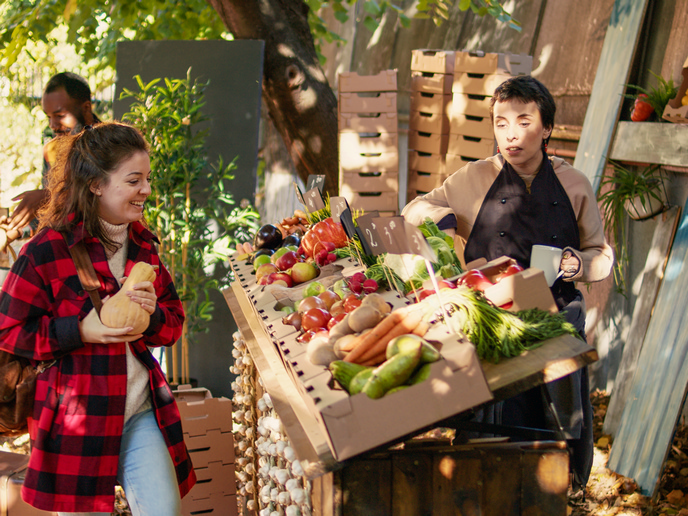
Climate change, demographic shifts and the transition to a greener economy are creating new challenges and opportunities for rural communities. Despite their growing contributions to agriculture and rural development, women innovators face barriers that limit their participation and visibility. This is often due to long-standing gender norms and traditional patterns of farm succession, which can limit women’s access to resources, leadership roles and entrepreneurial opportunities.
Challenging existing stereotypes
The EU-funded FLIARA(opens in new window) project set out to better understand and support female-led innovation as a pathway towards more sustainable, resilient and inclusive rural regions. Bringing together researchers and stakeholders across Europe, FLIARA explored how women contribute to innovation in farming and rural areas and identified the conditions needed for these innovations to thrive. Through extensive research and engagement activities, the project generated new evidence(opens in new window) on the role of women in shaping the future of Europe’s rural economy. “Women often face a double challenge: alongside the difficulties experienced by many rural innovators, they encounter additional barriers(opens in new window) linked to gender inequalities,” explains project coordinator Maura Farrell. Nonetheless, the research also demonstrated that when women lead innovations, they make important contributions across environmental, economic, social and cultural dimensions of sustainability.
Innovation diversity
One of the project’s most significant findings is the diversity of women-led innovation across Europe. FLIARA interviewed 200 women innovators(opens in new window) in 10 countries, revealing a wide range of activities spanning agriculture, tourism, social enterprise, culture, food production and digital technologies. FLIARA highlighted multiple routes through which women contribute to rural development. Many innovations build on the multifunctional nature of farming, creating new opportunities through agritourism, local food systems, green care initiatives and shorter supply chains. Others are helping diversify rural economies through activities in the creative sector, social services and technology-driven enterprises. According to Farrell: “Access to finance and supportive local conditions are key so that women can develop specialist skills and stay aligned with new knowledge and changing demands on enterprise.” Moreover, access to childcare and other services that support work-life balance can also determine whether innovative ideas become viable businesses and community initiatives.
Building communities of innovation
FLIARA established a European community of practice that connects women innovators, policymakers, researchers and rural development stakeholders. The initiative was designed to strengthen collaboration, promote knowledge exchange and increase recognition of women-led innovation. At the heart of this effort was the creation of a network of innovation women ambassadors(opens in new window) who shared their experiences and journeys through a dedicated visibility campaign. The aim was to inspire others while challenging outdated perceptions of who drives innovation in rural areas. “The idea behind the innovation ambassadors was to provide role models and respond directly to the lack of visibility of women-led rural and farm innovation,” emphasises Farrell. Overall, FLIARA combined research with awareness-raising activities to demonstrate the scale, diversity and impact of women-led innovation. The legacy of the project lies in empowering women to become key drivers of a more sustainable, resilient and inclusive rural Europe.