Towards smarter and more sustainable pest management

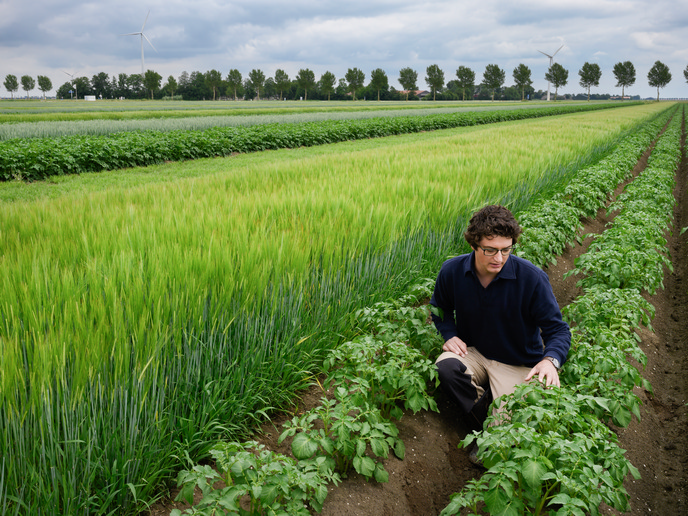
European agriculture faces a challenge: farmers must protect crops from pests and diseases to ensure food security and maintain yield, and profitability, while at the same time reducing reliance on chemical pesticides that can affect human health, biodiversity and the environment. Although integrated pest management (IPM)(opens in new window) offers a proven pathway towards more sustainable crop protection, its uptake remains limited.
Understanding the barriers to pest management adoption
The EU-funded SUPPORT(opens in new window) project sets out to understand the reasons behind the limited IPM adoption and how it can be overcome. Bringing together 20 organisations from 10 countries including universities, SMEs, farmer organisations and public authorities, the project has generated the knowledge needed to support the transition towards sustainable crop protection systems. The consortium focused on the barriers and incentives influencing farmer decisions(opens in new window), aiming to help policymakers, value chain actors and farmers work together to increase the uptake of IPM tools and technologies. “Farmers report environmental and biological barriers as well as economic constraints such as higher production costs and increased risk of yield decrease or quality loss,” explains project coordinator Johan Bremmer. The project’s analyses(opens in new window) confirmed that access to trusted technical advice plays a crucial role in decision-making.
Supporting better decisions and looking beyond one-size-fits-all solutions
A major achievement of SUPPORT has been the development of the IPM self-assessment tool (ISAT)(opens in new window), designed to help farmers and advisors evaluate different crop protection strategies. The first version of ISAT incorporates environmental and economic indicators that allow users to compare conventional approaches with alternative pest management options. The tool provides practical insights into the likely consequences of different decisions, helping farmers better understand potential trade-offs between productivity, environmental performance and costs. “Policymakers can also use this methodology by adopting indicators to monitor progress in sustainable crop protection,” highlights Bremmer. One of the project’s key findings is that IPM adoption(opens in new window) is influenced by a wide range of interconnected factors. Successful implementation requires much more than replacing individual pesticides with lower-risk alternatives. Interestingly, the findings also suggest that farmers’ decisions are influenced more by their own attitudes and perceived ability to implement IPM than by social pressure or expectations from others. According to Bremmer, “Effective transition strategies must consider local conditions, crop characteristics and farmers’ preferences rather than rely on universal solutions.” Project findings highlight the importance of advisory services, training and knowledge exchange. SUPPORT also underlines the need to understand the broader context in which farmers operate, including market pressures, regulations and access to innovation. These insights are helping researchers develop more realistic pathways for increasing IPM uptake across diverse farming systems.
Building sustainability
The consortium developed a multi-actor framework built around three levels: national crop clusters, communities of practice and a network of practice. This stakeholder ecosystem brought together researchers, policymakers, farmers and supply chain actors. It supported policy dialogue and the co-creation of solutions to accelerate the transition to sustainable food systems. Looking ahead, SUPPORT argues that achieving substantial reductions in pesticide use will require coordinated action across the entire agri-food system. Understanding farmer decision-making and providing decision-support tools are important steps, but they are unlikely to be sufficient on their own. “We need to work on an institutional setting involving the entire value chain that supports the uptake of IPM tools and technologies as well as the reduction in pesticide use and dependency,” concludes Bremmer.