European innovation for a world facing more wildfires


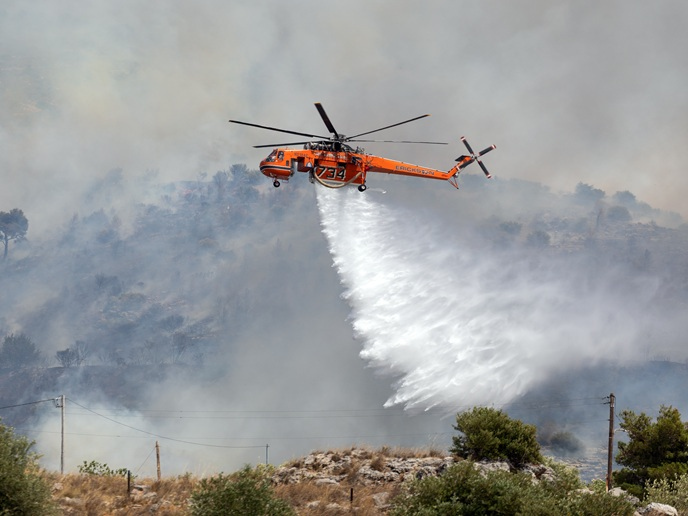
Forest fires, driven by complex interactions between climate, shifts in land use, and forest management practices, are growing more frequent and severe in Europe and around the world. As well as loss of life, wildfires inflict economic effects through property destruction, increased healthcare costs and tourism impacts, estimated at EUR 2.5 billion(opens in new window) per year in the EU, and rising. “Wildfire management is a multidimensional challenge that goes well beyond simply knowing where a fire has started,” explains Michele Corleto, associate professor of International Law at Pegaso University(opens in new window) (website in Italian). “Conventional fire-management approaches, typically organised around national authorities and reactive suppression, are increasingly mismatched to the spatial extent, speed and complexity of contemporary events.” Responding to this challenge, the SILVANUS(opens in new window) project developed a climate-resilient forest management system, using a multilayered architecture comprising remote sensing, communication, modelling, decision support and citizen engagement components. It brings together 21 interoperable products that span fire prevention, preparedness, detection and response, along with post-fire restoration and adaptation. The system is currently at an advanced pre-commercial stage, validated through a structured programme of 12 pilots across 11 countries. “Beyond its technological achievements, SILVANUS has built a cross-sectoral governance model that brings together governments, research institutions, emergency services and civil society around a shared agenda,” says Corleto, who acted as project coordinator.
Drones, sensors, cloud and crowd
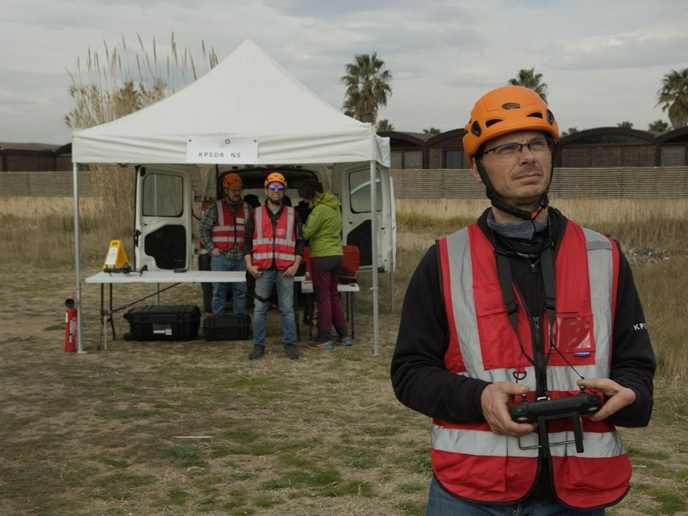
SILVANUS developed and integrated technologies such as internet-linked fire detectors, autonomous drones, robotics, data analytics, fire modelling powered by machine learning, and training environments supported by augmented and virtual reality (AR/VR). Distributed sensors collect meteorological and fuel-moisture data in forests, while drones provide aerial and ground-based observation and fire inspection, underpinned with a wireless connectivity in remote areas. The modelling layer offers biodiversity, fuel and fire-behaviour models, augmented by artificial intelligence components that help to detect fires and predict their severity. A decision support layer helps authorities allocate resources, plan evacuation routes and monitor post-event. A citizen-facing app offers public advice and the ability to report fires. The platform was validated through a series of pilots, including trials of ground drones(opens in new window) in Brisbane, Australia, firefighter training exercises(opens in new window) in Dalmatia, Croatia, a post-fire restoration programme(opens in new window) in Sebangau National Park, Indonesia, and more. Successful application across such different contexts demonstrates the potential of ‘made in Europe’ wildfire solutions to be scaled internationally in a growing global market for wildfire resilience.
From science to policy and implementation
The project’s impacts are broad, from an immersive AR/VR training toolkit for wildland firefighters and a multi-stakeholder knowledge network, to the translation of wildfire science into concrete policy recommendations, such as contributions to the European Commission’s recent Communication on integrated wildfire risk management(opens in new window). The SILVANUS consortium is now establishing a market exploitation strategy to promote industrial uptake of its technologies. “From inception, SILVANUS was designed to be both scalable and exportable,” adds Corleto. “On this basis, SILVANUS can be regarded as a mature candidate for European technology export to wildfire-affected regions worldwide.” Its modular and interoperable architecture allows individual components – sensing, modelling, decision support, training and citizen engagement – to be adapted for other applications across floods, industrial emergencies and ecosystem monitoring. Several project partners are already turning SILVANUS results into durable products and follow-on projects around the world, demonstrating the potential for the project’s technologies to reach new sectors and markets.