Role of ageing blood vessels in awakening dormant metastatic cancer cells

Cancer cells originating in other body areas – particularly breast and prostate – travel in the circulatory system and often settle in the bone, one of the most important sites of metastasis. Some of these disseminated tumour cells (DTCs) can remain dormant for years, hiding from the body and resisting standard chemotherapy. The ERC-funded METANICHE(opens in new window) project set out to understand why bone environment enables DTCs to remain dormant and sometimes become active again. The team hypothesised that different blood vessels create different neighbourhoods for DTCs and that ageing changes that environment, potentially tipping the balance towards activation.
Blood vessels are an active communication network
Bone contains(opens in new window) different types of blood vessels with different characteristics and functions. The endothelial cells lining the vessels send molecular signals – angiocrines – to surrounding cells including DTCs. These signals can influence whether cells grow, survive, remain dormant, migrate or participate in tissue repair. “Blood vessels are not just roads delivering supplies – they are also a dynamic communication network,” says principal investigator Anjali Kusumbe, of the University of Coimbra(opens in new window). As bone ages, some of its blood vessel, like H type, decline in number. METANICHE showed that the signals and function of the vascular network also change. Different endothelial populations changed, as did their signals, and these principles were not limited to bone. Ageing pancreatic vessels lost cells that support insulin-producing cells; restoring a single vascular signal revived this function, pointing to vascular signalling as a therapeutic target wherever ageing disrupts a cell’s neighbourhood, including that of DTCs.
Pioneering approaches reveal an unexpected lymph role
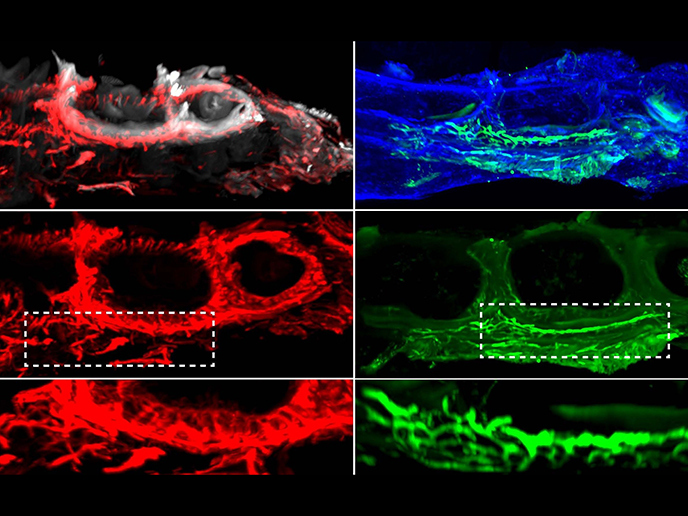
The project used 3D imaging, tissue clearing and light-sheet microscopy to visualise intact skeletal tissues at high resolution. Single-cell and spatial genomics characterised endothelial populations and their changes across skeletal sites, ageing, injury and disease. These approaches were combined with mouse models and functional experiments. “This led to one of our most unexpected discoveries – lymphatic vessels actively contribute to skeletal repair,” notes Kusumbe. Bone lymphatic endothelial cells, activated after bone injury, switched on a repair programme, reshaping the marrow environment that is also occupied by DTCs. This response breaks down in some jaw diseases. However, boosting the signal that drives lymphatic vessel growth restored the response and enhanced bone regeneration in experimental models. The METANICHE project also challenged the assumption that the skeleton and its circulatory systems age the same way everywhere. Skull bone marrow proved particularly vulnerable to age-related decline while vertebral marrow stayed relatively well preserved, possibly explaining why DTCs metastasise to the vertebrae more often than to the skull.
Vascular system as a powerful therapeutic target
For Kusumbe, the most exciting outcome is broader than any single finding: the fate of a cell can be strongly influenced by the neighbourhood in which it lives, a principle that applies as much to a dormant DTC as to a stem cell or a healing wound. “Our research has recast blood and lymphatic vessels as active regulators of tissue health, ageing, regeneration and disease – including bone metastasis – rather than passive conduits,” explains Kusumbe. By identifying signals that may keep DTCs dormant and drive skeletal repair, METANICHE opens a route towards therapies that target blood and lymphatic vessels, potentially reducing metastatic recurrence and improving regeneration in ageing bone.